
Difficult Intubation in the Obese Patient
|
The following scenario is a synopsis of the anesthesiologist’s worst nightmare: can’t intubate/can’t ventilate. This ongoing concern in anesthesiology is being revisited in light of the personal observation that as the prevalence of obesity increases, standard oral intubation is becoming more difficult. The following summary is based on an actual closed claim case. Case A 54-year-old man was scheduled for a total knee replacement. The patient was 5’6” and weighed 250 pounds. His BMI was 40 kg/m2. In addition to obesity concerns, his medical history included hypertension, hypercholesterolemia, GERD, type II diabetes (diet controlled), and possible sleep apnea. The patient agreed to the placement of an epidural catheter for postoperative pain control but demanded to “be asleep” for the surgery. Following the uneventful placement of an epidural catheter, the patient was placed in a fully supine position, monitors were connected, and a rapid sequence induction was performed. Oral laryngoscopy with a MAC 3 blade was attempted which revealed a grade 4 view (no identifiable laryngeal anatomy).1 Mask ventilation with an oral airway/bag and mask was attempted and noted to be difficult requiring high positive inspiratory pressures. Oral laryngoscopy with a MAC 4 and then a Miller 2 blade was attempted. The difficult airway cart, an intubating LMA, and additional anesthesia assistance were summoned. Between each attempt to secure an airway, mask ventilation became increasingly difficult; peak airway pressures were reported to be “sky high.” After several minutes of unsuccessful airway management, a general surgeon arrived. As the surgeon attempted a difficult tracheotomy, the patient arrested and further resuscitation efforts failed. Discussion For every dramatic, worst-case scenario as above, how many countless near misses occur? This article is not intended to be a lengthy review of the difficult airway. There are many excellent resources addressing this topic by notable national airway educators. (Please see Caplan, et al.’s “Practice Guidelines for Management of the Difficult Airway.”2,3 The House of Delegates of the American Society of Anesthesiologists spent more than 18 months and more than $150,000 in approving these guidelines.) The intent of this article is to share some suggestions based on personal experience. As mentioned earlier, I have observed a trend of an increase in the overall number of difficult airway patients. There are several reasons for this, but perhaps an identifiable problem is the ever-increasing incidence of obesity with attendant comorbid disease processes. Five of the top 10 most “overweight cities” in the U.S. are in Texas. As a broad classification, the morbidly obese patient is “apple-shaped” (tight fat) in appearance or is “pear-shaped” (loose fat) in appearance.4 Based on my experience, the “tight fat” obese patient tends to have a higher incidence of difficult airway issues.
Although all 6 points are important, in my opinion, “the jaw tells the story.” An over-looked and simple clinical sign to assess the jaw is the upper lip bite test.7 The patient is asked to touch their upper lip with their lower teeth, i.e., protrude the mandible. This simple test addresses D3 and D6. Concerning point D5, ask the patient to look up at the ceiling or tilt their head backward. Any launching forward of the patient’s shoulders confirms that the range of motion of the cervical spine is limited. Having clinically identified a potentially difficult airway and especially for the “tight- fat”/“apple shaped” obese patient, here are some personal, practical suggestions:
Again, the above suggestions are my opinions based on personal experience. For more information, please review the ASA algorithm for managing difficult airways, available at http://www.asahq.org/publicationsAndServices/Difficult Airway.pdf.
|
References
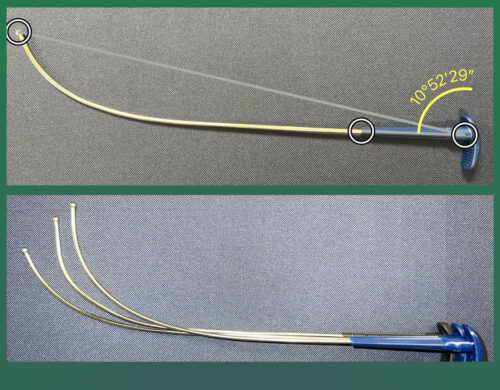
DISCLOSURE: Dr. Troop is the inventor of a commercially available pre-formed positioning aid mentioned in this article. |