
|
Descending Bellows Drives Question Dear SIRS: We are currently evaluating new anesthesia machines for purchase. One of the models is a 2005 Datascope Anestar model. It has a hanging bellows. The company states that the hanging bellows is no longer a concern. The uncoupling of the fresh gas flow means that an increase in fresh gas flow will NOT increase the tidal volume. Do you have any resources, evaluations, or comments about the hanging bellows on the new machines? Dräger and Datex-Ohmeda do not have this type of bellows. Response: Dear Dr. Ciochetty, Datascope appreciates the opportunity to respond to your inquiry about descending bellows and their relationship to a fresh-gas decoupled anesthesia circuit. However, before I get into the technical description of the Anestar’s circuit, I would like to unequivocally state that any modern anesthesia machine, marketed in the U.S. today, including the Anestar, is safe regardless of which ventilation technology is being employed. Information to the contrary may be outdated or intended to mislead. As cost-effective sensor technology and embedded software have been integrated into anesthesia machines over the recent past, clinicians have benefited from new functionality unattained in previous generations of anesthesia delivery equipment. More importantly, such technology adds and automates an increased level of vigilance, with the ultimate benefit of increasing patient safety. Similarly, I am reminded of how driver safety is improved in a modern automobile through accepted invisible features such as ABS and traction control. All anesthesia systems on the market today control the fresh gas flow within the breathing cycle to achieve constant tidal volume delivery. In part, they depend on their alarm technology and other monitoring, such as capnography, to alert the user in case of disconnects or leaks. Besides accepted visual indications of disconnects and leaks, manufacturers nowadays include additional alarms to appropriately alert the user. Several national and international standards have been developed to increase the safety and reliability of such indications.
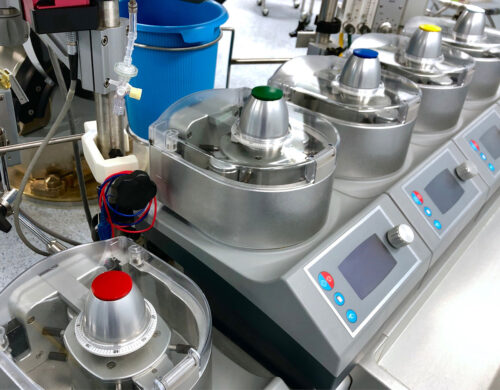
These alarms are in addition to a graphic, breath-by-breath, display of the pressure waveform. Besides the electronic vigilance, in the case of a fresh-gas decoupled system, the physical/visual indication has shifted from the bellows to the reservoir (breathing) bag, which is always in the circuit. During normal operation, the bag has a full appearance and appears to pulsate, inflating slightly during inspiration and returning to normal volume during expiration. But, in case of a disconnect, or a major leak, the bag will deflate after a few breaths, simulating the behavior of ascending bellows. If the leak is less than the fresh gas flow, the bag (reservoir) will supplement the fresh gas flow, while continuing to ventilate the patient and the bag will appear to pulsate more deeply. Since, indirectly, leaks are an implied topic of this discussion, I would like to point out that the Anestar breathing circuit, including the ventilator, absorber, valves, and sensors, are implemented in a module within a single aluminum block virtually eliminating the possibility of internal system leaks. Furthermore, the breathing module is warmed to 35°C to prevent condensation from occurring within the breathing circuit and the bellows. At this point, I would like to provide a brief description of the operation of the Anestar’s fresh gas decoupling breathing circuit. Simply stated, a fresh gas decoupled anesthesia circuit delivers the set tidal volume to the patient independently of the fresh gas setting. We believe that the accurate delivery of set tidal volume is clinically important, especially when ventilating children. In such a circuit, the bellows, reservoir bag, and decoupling valve facilitate a straightforward way to implement this technology without the need for external sensors and a feedback mechanism. In addition, this circuit’s configuration also facilitates a compliance compensation method, which corrects for compliance deviations external to the breathing module (e.g., patient’s breathing hoses). Following the Anestar’s simplified schematic representation:
In summary, Dr. Ciochetty, the descending bellows is an essential part of the Anestar’s safe, state-of-the-art, reliable, and cost effective anesthesia circuit. Fresh gas decoupling keeps complexity to a minimum and offers the clinical advantage of maintaining the set tidal volume independently of the fresh gas flow. Respectfully Submitted, Abe Abramovich |
|
|
||
|
||