



 PDF
PDFEndotracheal tubes are used every day in the operating room. However, due to frequent supply chain disruptions, anesthesia professionals may encounter unfamiliar brands or types of endotracheal tubes. Understanding of the design and safety features is critical to ensuring that the appropriate endotracheal tube is used for every patient.
Every day, anesthesia professionals reach into the anesthesia cart assuming that a familiar, reliable endotracheal tube (ETT) will be available and function as expected. This assumption is becoming increasingly questionable as recent years have been marked by supply chain instability, product recalls, material reformulations, and manufacturer discontinuations, fundamentally altering the landscape of airway equipment. As a result, clinicians are now required to make real-time decisions about devices that may differ subtly, but meaningfully, from those they have previously used.
This changing equipment environment exposes a potential safety gap in airway management. ETTs are often treated as interchangeable commodities rather than complex, variable medical devices with distinct performance characteristics and safety profiles. In pediatric anesthesia, where margins for error are minimal, even small variations in tube design, material, or geometry can have disproportionate clinical consequences. Thus, understanding ETT design is no longer a matter of technical familiarity alone, but an essential component of patient safety.
ENDOTRACHEAL TUBE COMPONENTS
In the last century, ETTs have been made of various materials including solid metal, rubber, and vinyl acrylic resin plastic (Vinyl-Portex).1 However, modern endotracheal tubes are made of plastic, most commonly polyvinyl chloride (PVC). To soften the PVC and to create more flexibility, chemicals such as di-(2-ethylhexy) phthalate (DEHP) have been used in many plastic medical products including ETTs. However, these chemicals are not tightly bound to the PVC plastic and can leach out over time.2 Regulators advocated for a phase out of phthalate use as early as 2001 due to concerns about risks of endocrine disruption, especially in vulnerable populations such as neonates.3 The data on the amount and impact of phthalates released from an ETT, however, are lacking.3 There has been varying compliance with this recommendation by manufacturers. In May 2025, a large ETT manufacturer announced the discontinuation of several types of ETT due to a desire to eliminate the use of DEHP.4 Many of the replacement tubes are less flexible and their cuffs are larger than those previously available, which is especially noticeable in small ETTs such as those used in neonates, infants, and toddlers.
ENDOTRACHEAL TUBE DESIGN
The size of the ETT is defined by internal diameter (ID), which is a primary determinant of airflow resistance and suction capability. However, outer diameter (OD), wall thickness, and manufacturing tolerances introduce variability that is often underappreciated in clinical practice. This was underscored by a 2025 Food and Drug Administration (FDA) recall of infant-sized ETTs due to reduced internal diameter, effectively increasing resistance and impairing ventilation.5 There were multiple reports of respiratory events prior to the recall.5 Furthermore, inter-manufacturer differences in OD can complicate airway management in anatomically constrained patients, reinforcing the need for device-specific awareness (Figure 1).
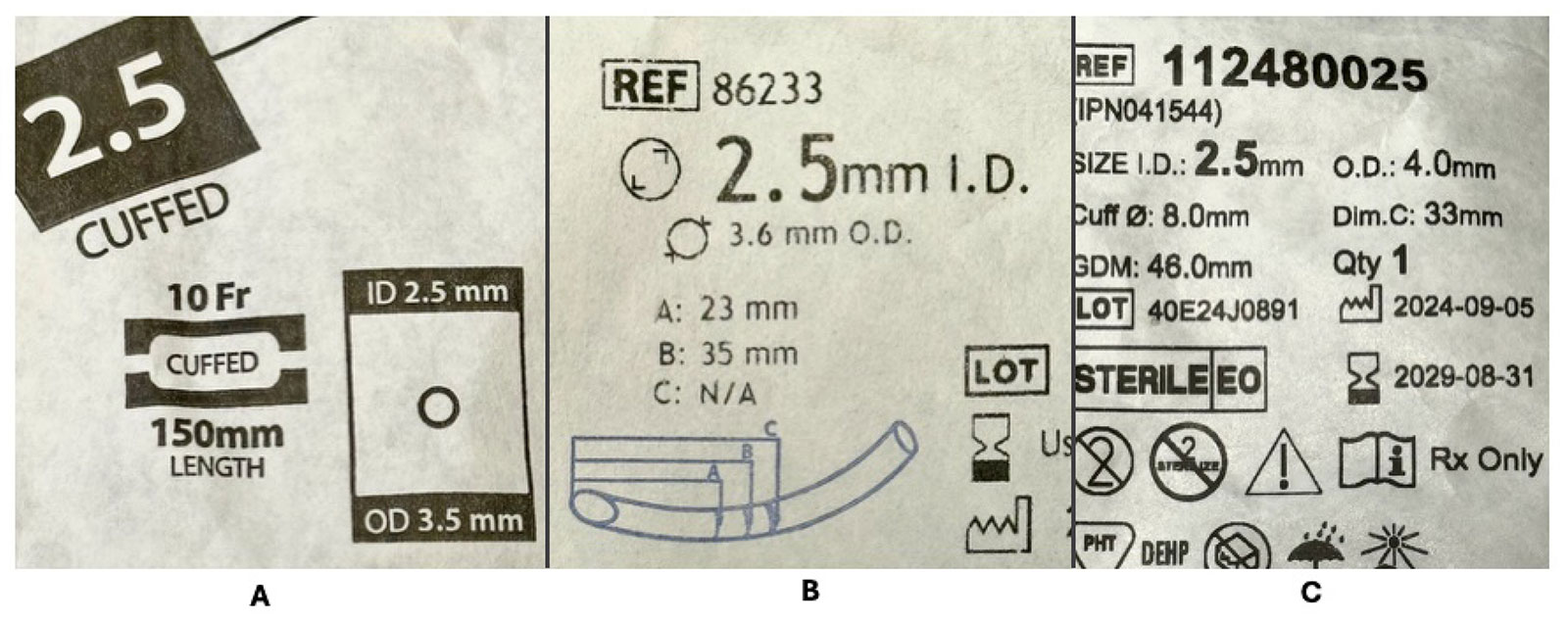
Figure 1. Variations in external diameters of endotracheal tubes. In these examples of 2.5 cuffed endotracheal tubes, three manufacturers report an external diameter of 3.5 mm (A: SunDex), 3.6 mm (B: Shiley), and 4.0 mm (C: Rusch). In small children, this is an important consideration.
Cuffed ETTs are now standard in most pediatric anesthetic practices. The cuff serves as a dynamic seal, balancing effective ventilation while minimizing mucosal injury. However, cuff design can vary substantially, including differences in shape (barrel, tapered, cylindrical), material (PVC vs. polyurethane), and contact surface area. These differences influence sealing characteristics and micro-aspiration risk. In a study of cuff leakages in simulated tracheas, ETTs with a barrel shaped cuff, which had the most surface area on the trachea, and those made from polyurethane rather than PVC plastic, were the most occlusive (Figure 2).6
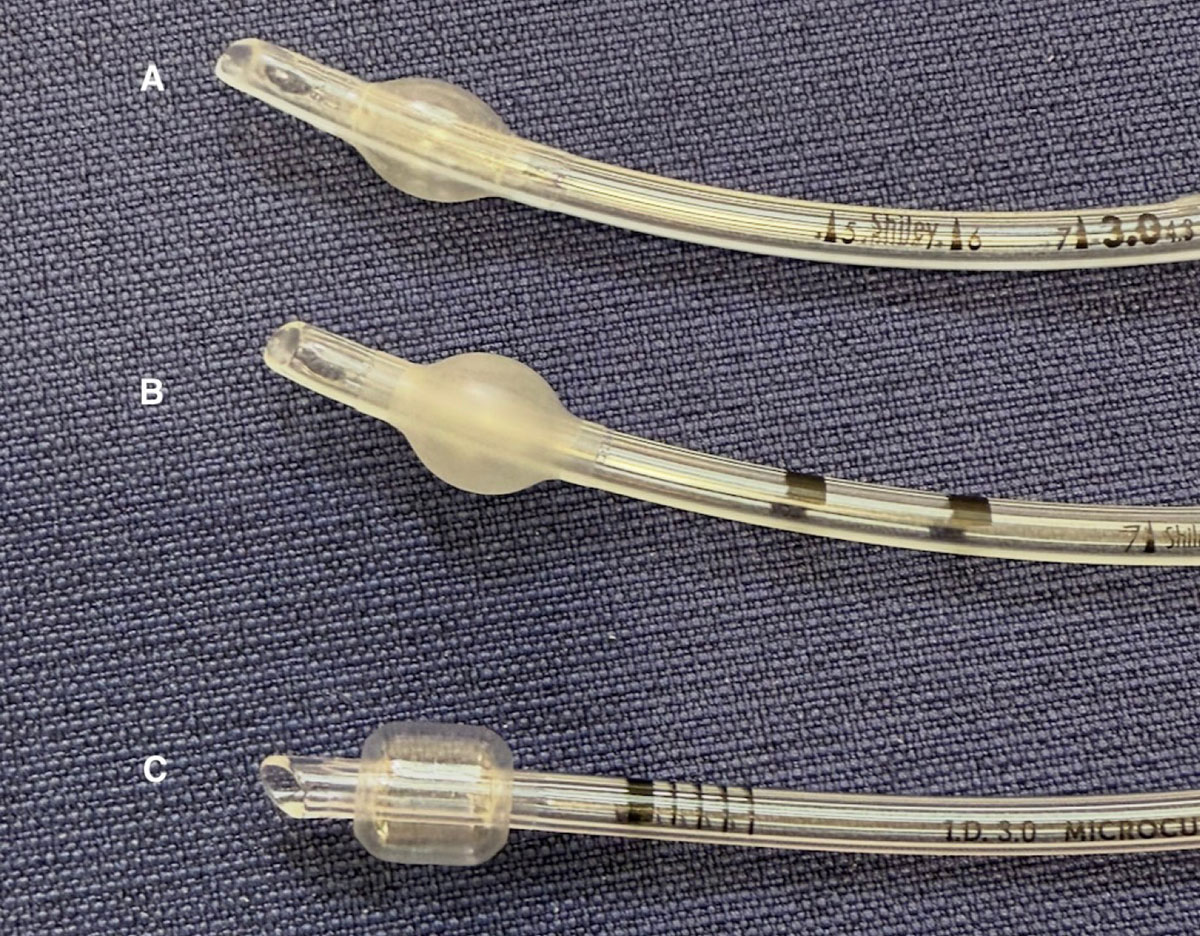
Figure 2. Endotracheal tube cuff designs and variations in markers. These are three examples of 3.0 endotracheal cuffed tubes: A: Shiley Hi-Low PVC cuff; B: Shiley Intermediate PVC cuff; C: Microcuff, polyurethane cuff.
The pilot balloon system, often overlooked, represents a potential point of ETT failure. Defects such as incompetent valves or balloon microperforations can compromise cuff integrity (Figure 3). Additionally, in small-diameter ETTs, the internal routing of the pilot line may encroach upon the lumen diameter. In our institution, this manifested as an inability to pass a suction catheter through multiple 2.5-mm cuffed ETTs, creating a previously underrecognized mechanism of functional airway obstruction (Figure 4). This defect was reported to the FDA and the manufacturer, but no action has been taken by either to date. Such findings emphasize the importance of pre-use functional assessment beyond visual inspection.
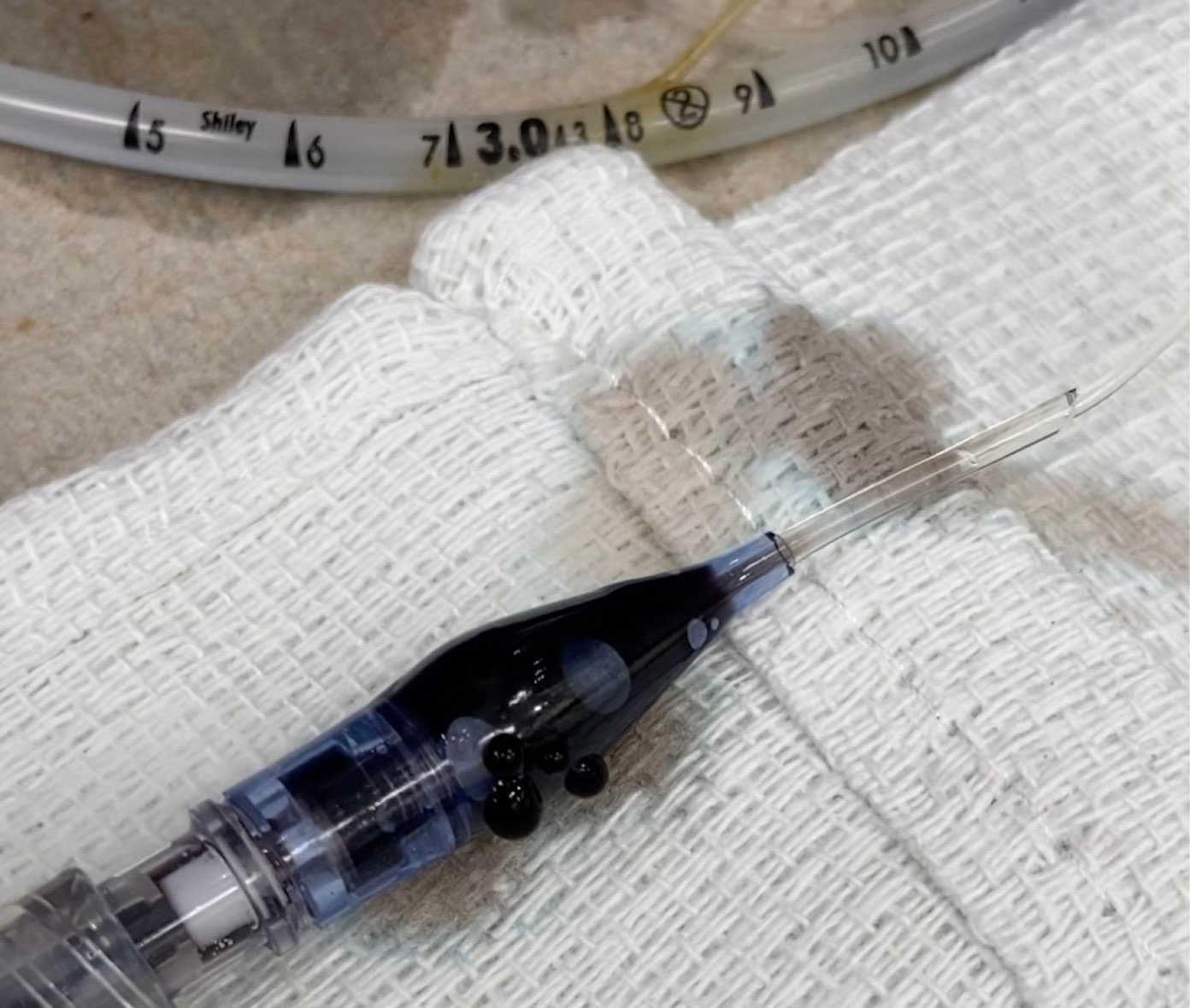
Figure 3. Leaks in the pilot balloon or pilot line. This endotracheal tube was identified after testing to have leaks in the mechanism to inflate the pilot balloon. Dye was used to aid in visualization.
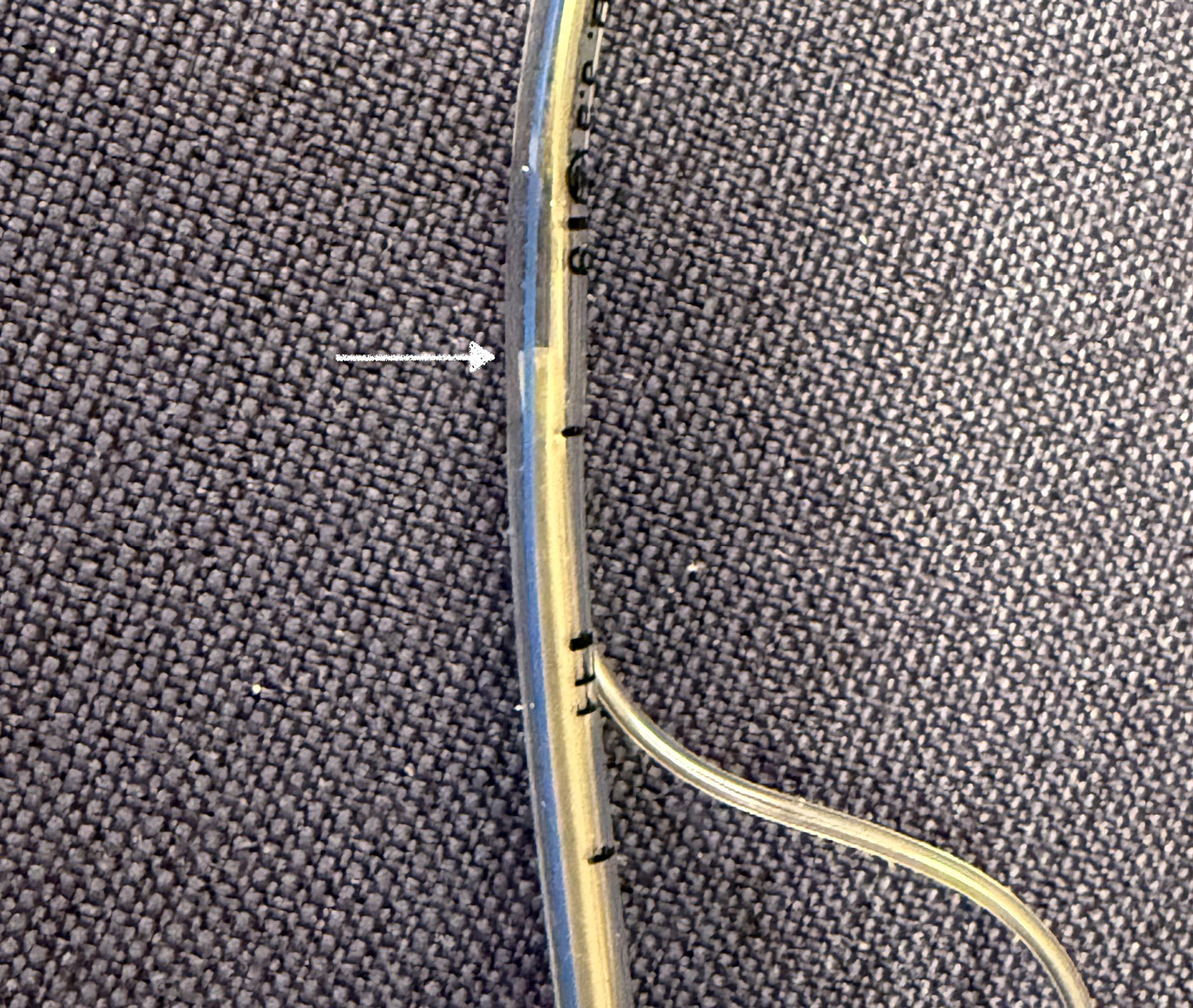
Figure 4. Endotracheal tube patency. Multiple 2.5 endotracheal tubes were found not to allow for passage of a size 5/6 French suction catheter. This appears to be due to a manufacturing defect where the pilot line inserts into the endotracheal tube (arrow).
Distal tube design can also influence ETT performance. The standard left-facing bevel facilitates visualization during direct laryngoscopy, yet alternative designs, such as the Flex-Tip, aim to reduce airway trauma and improve navigation. These modifications, however, introduce new potential sources of failure; deformation of a flexible tip, for example, can partially obstruct the ETT lumen.7
Similarly, the presence or absence of a Murphy eye reflects a trade-off between redundancy and structural simplicity.8 While the Murphy eye may provide a secondary ventilation pathway in the event of tip occlusion, it is absent in some commonly ETTs tubes such as the Microcuff®, which may suggest that safe practice can be achieved without it.8 However, endotracheal obstruction requiring emergent ETT replacement has been reported when there is no Murphy eye present.9
Markings on the ETT, including radiopaque lines and depth indicators, are intended to enhance safety but are not standardized across manufacturers. Other variations include the manufacturer’s name or trademark, the size of the ETT, and the words “single use” for non-reusable tubes. Markers may be placed to aid in positioning the ETT, but these also vary between brands and types of ETT. This lack of standardization can complicate confirmation of appropriate tube position (Figure 5).
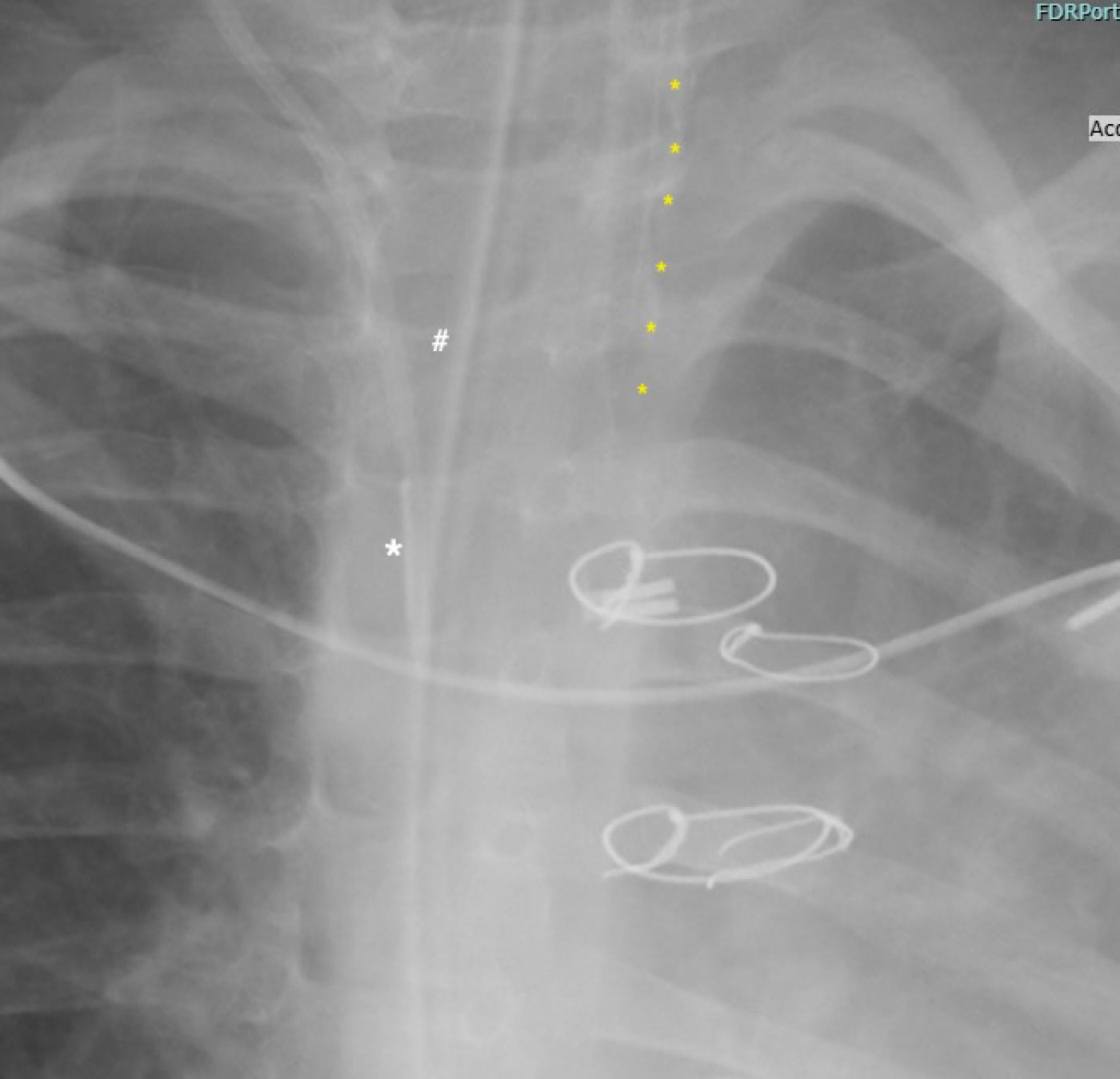
Figure 5. Radiopaque markers. This magnified image of a postoperative chest x-ray in a child following cardiac surgery was read by radiology as extubated due to the faint markers on this brand of endotracheal tube. White * – central venous line; White # – gastric tube; Yellow • – the endotracheal tube marker
WHAT TO DO WHEN AN ETT DEFECT IS IDENTIFIED
The Manufacturer and User Facility Device Experience (MAUDE) database of the FDA contains reports of possible safety issues with all types of medical devices, as well as any recalls of products.10,11 Manufacturers, importers, and device user facilities are required to submit reports if there is believed to be a device malfunction or if there was a case of patient death or serious injury associated with the device.12 Health care professionals and patients can submit voluntary reports about adverse events as well. However, individual reports are not verified by the FDA, and reporting is limited due to under-reporting, inaccuracies, and incomplete data.16 While there are some national databases for adverse events in anesthesia, none are specifically product- or equipment-focused and generally near-misses are not reported. Most institutions do not routinely record the lot number of an ETT when placed in a patient, making tracking of events also very difficult.
Undoubtedly, product availability is going to be an ongoing issue for all anesthesia professionals. The pediatric population is especially vulnerable, as even small design changes in devices can create hazards in placement and performance. All products, including ETTs, which are going to be used in a patient, must be well understood to be used in the safest manner possible.
Dr. Brown is an associate professor in the Division of Cardiac Anesthesia, Department of Anesthesiology, Critical Care, and Pain Medicine at Boston Children’s Hospital, Boston, MA
The author reports no conflicts of interest.
REFERENCES
- Featherstone PJ, Ball CM, Westhorpe RN. The evolution of the polyvinyl chloride endotracheal tube. Anesth Intensive Care. 2015;43:435-436. PMID: 26099776
- Morton WJ, Muller CT, Goodwin N, et al. Investigation of phthalate release from tracheal tubes. Anesthesia. 2013;68:377-381. PMID: 23278306
- Vanhorebeek I, Malarvannan G, Guiza F, et al. Phasing out DEHP from plastic indwelling medical devices used for intensive care: Does it reduce the long-term attention deficit of critically ill children? Environ Int. 2022;150:106962. PMID: 34739923
- Medtronic product discontinuation notice. https://www.medline.com/media/assets/pdf/vendor-list/Medtronic_Med_Surg_Shiley_Product_Notification_May2025.pdf Accessed October 30, 2025
- United States Food and Drug Administration. Smiths Medical issues urgent medical device correction informing customers of a potential issue with certain sizes of intubation oral/nasal endotracheal tubes being smaller than expected. March 10, 2025. Available at: https://www.fda.gov/safety/recalls-market-withdrawals-safety-alerts/smiths-medical-issues-urgent-medical-device-correction-informing-customers-potential-issue-certain. Accessed October 30, 2025.
- Michikoshi J, Yamamoto M, Takagi K, et al. Evaluating the sealing capacities of different endotracheal tube cuff designs. Resp Care. 2025;70:962-967. doi: 10.1089/respcare.12465. PMID: 40219612
- Yasunami K, Takenaka I, Minami T, et al. Unexpected obstruction of a Parker Flex-Tip Endotracheal Tube caused by outward bending of its tip: a case report. AA Pract. 2020;14:e01232. PMID: 32496426
- Hall EJ, Burns AD, Ng ACK, Lumb AB. Does the Murphy’s eye perform its role? Anesthesia. 2015;70:1320-1333. PMID: 26449299
- Lam H, Kitzman J, Matthews R, et al. Symptomatic endotracheal tube obstruction in infants intubated with Microcuff endotracheal tubes. Pediatr Anesth. 2016;26:767–775. PMID: 27277651
- United States Food and Drug Administration. Medical device recalls. Available at: https://www.accessdata.fda.gov/scripts/cdrh/cfdocs/cfres/res.cfm. Accessed October 30, 2025.
- United States Food and Drug Administration. Manufacturer and User Facility Device Experience (MAUDE) Database. Available at: https://www.accessdata.fda.gov/scripts/cdrh/cfdocs/cfmaude/search.cfm. Accessed October 30, 2025.
- United States Food and Drug Administration. Medical device reporting (MDR): how to report medical device problems. Available at: https://www.fda.gov/medical-devices/medical-device-safety/medical-device-reporting-mdr-how-report-medical-device-problems. Accessed October 30, 2025