Episode #314 PACU Corneal Abrasion Protocol
July 8, 2026
Welcome to the next installment of the Anesthesia Patient Safety podcast hosted by Alli Bechtel. This podcast will be an exciting journey towards improved anesthesia patient safety.
Our featured article is “Managing Postoperative Corneal Abrasions: A Protocol for Anesthesiology Teams”
by Reihaneh Forghany, MD, FASA. This is a APSF Newsletter Article that was published online June 2nd, 2026.
The big takeaways from today’s show are:
- Corneal abrasions are the most prevalent ocular injuries seen in the postoperative period.
- Symptoms include eye pain or blurry vision and patient need to be assessed for vision changes, redness, tearing, photophobia, or a gritty sensation.
- Treatment for a simple corneal abrasion involves erythromycin ointment every 4 hours until symptoms resolve.
- If no corneal defect is present, the likely diagnosis is keratoconjunctivitis or dry eyes and artificial tears may be administered.
- Ophthalmology consult is likely needed anytime there is vision loss or for patients with symptoms that last for over 24 hours.
Here are citations to the articles that we talked about on the show today:
Liyew TM, Mersha AT, Admassie BM, Arefayne NR. Risk stratification, prevention and management of perioperative corneal abrasion for non-ocular surgery: Systematic Review. Ann Med Surg (Lond). 2023 Dec 4;86(1):373-381. doi: 10.1097/MS9.0000000000001566. PMID: 38222698; PMCID: PMC10783396.
Papp AM, Justin GA, Vernau CT, Aden JK, Fitzgerald BM, Kraus GP, Legault GL. Perioperative Corneal Abrasions After Nonocular Surgery: A Systematic Review. Cornea. 2019 Jul;38(7):927-932. doi: 10.1097/ICO.0000000000001972. PMID: 31033698
Here is the PACU Corneal Abrasion Protocol that we talked about on the show today:
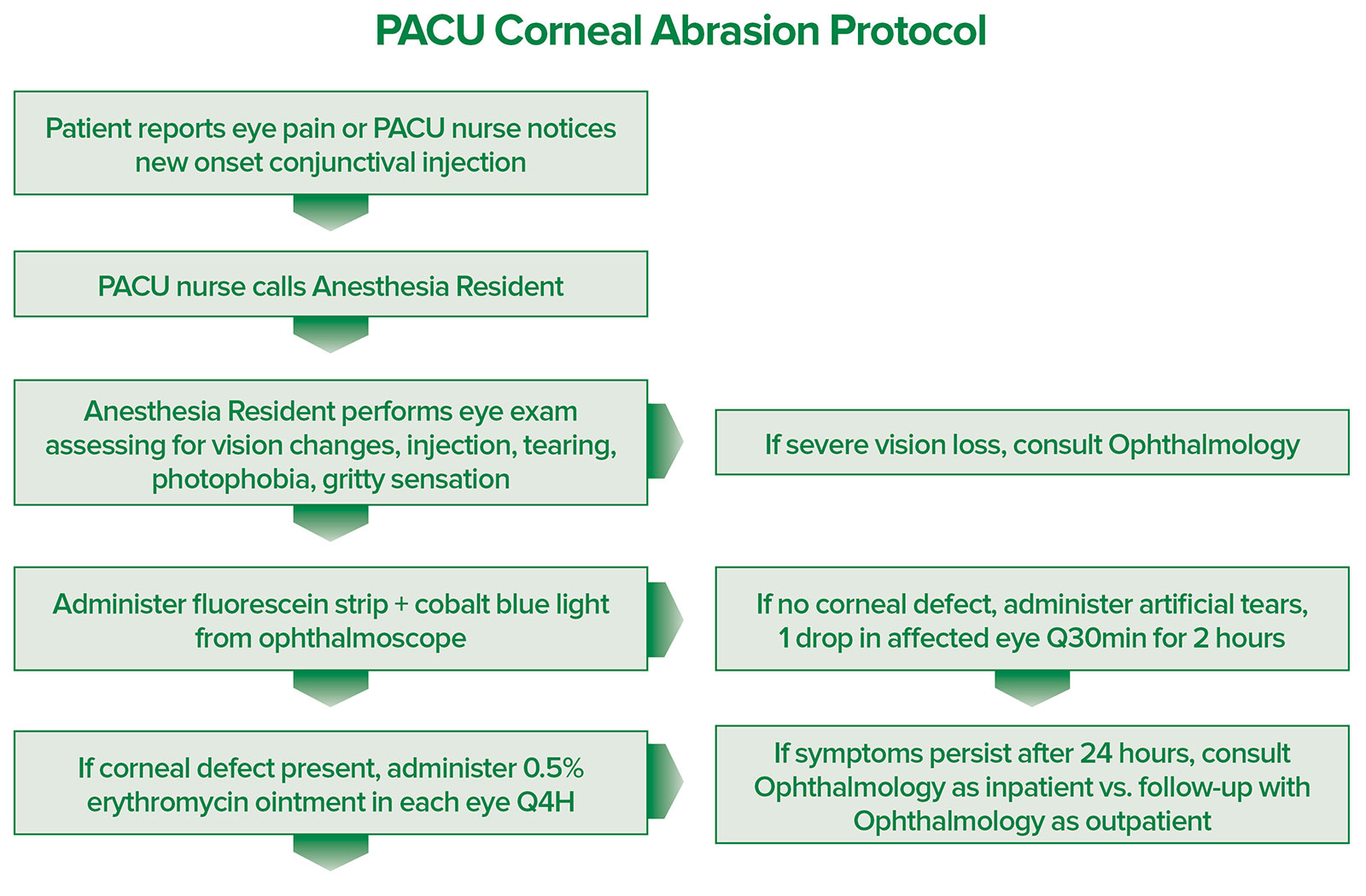
Figure 1: The University of California Davis PACU Corneal Abrasion Protocol. This is a step-wise protocol to streamline the management of corneal abrasions in the PACU. PACU: Postanesthesia Care Unit.
This episode was edited and produced by Mike Chan.
Subscribe to our YouTube Channel here: https://www.youtube.com/@AnesthesiaPatientSafety
Be sure to check out the APSF website at https://www.apsf.org/
Make sure that you subscribe to our newsletter at https://www.apsf.org/subscribe/
Follow us on Twitter @APSForg
Questions or Comments? Email me at podcast@apsf.org.
Thank you to our individual supports https://www.apsf.org/product/donation-individual/
Be a part of our first crowdfunding campaign https://www.apsf.org/product/crowdfunding-donation/
Thank you to our corporate supporters https://www.apsf.org/donate/corporate-and-community-donors/
Additional sound effects from: Zapsplat.
© 2026, The Anesthesia Patient Safety Foundation
Opening Clip: [Forghany] “As a resident on my PACU rotation, I encountered a fair number of patients with corneal abrasions in the recovery unit. There was often uncertainty regarding how to diagnose and manage a simple corneal abrasion, which led to unnecessary ophthalmology consults. This not only caused a prolonged PACU length of stay, but also led to reduced patient satisfaction. Given the simplicity of treatment options for a simple corneal abrasion, which typically involves a combination of eye drops, delaying the patient’s discharge for an evaluation by an ophthalmologist seemed unnecessary. So, I partnered with the UC Davis Department of Ophthalmology to establish this PACU corneal abrasion protocol.”
Do you have a PACU corneal abrasion protocol at your institution? If not, what are you waiting for? We have the key ingredients, valuable insight, and a potential framework so that you can create a protocol within your own clinical setting. But keep in mind that the quality improvement project that we are going to talk about today reflects the experiences and practices at the author’s institution and is not prescriptive.
Hello and welcome back to the Anesthesia Patient Safety Podcast. I’m your host, Alli Bechtel. The big takeaways from today’s show are:
- Corneal abrasions are the most prevalent ocular injuries seen in the postoperative period.
- Symptoms include eye pain or blurry vision and patient need to be assessed for vision changes, redness, tearing, photophobia, or a gritty sensation.
- Treatment for a simple corneal abrasion involves erythromycin ointment every 4 hours until symptoms resolve.
- If no corneal defect is present, the likely diagnosis is keratoconjunctivitis or dry eyes and artificial tears may be administered.
- Ophthalmology consult is likely needed anytime there is vision loss or for patients with symptoms that last for over 24 hours.
Before we dive further into the episode today, we’d like to recognize Solventum, a major corporate supporter of APSF. Solventum has generously provided unrestricted support to further our vision that “no one shall be harmed by anesthesia care”. Thank you, Solventum – we wouldn’t be able to do all that we do without you!”
Our featured article is “Managing Postoperative Corneal Abrasions: A Protocol for Anesthesiology Teams”
by Reihaneh Forghany. This is a APSF Newsletter Article that was published online June 2nd, 2026. To follow along with us, head over to APSF.org and click on the Newsletter Heading. The first one down is Newsletter articles. Then, you can scroll down until you get to our featured article, and I will include a link in the show notes as well.
We have exclusive content today from the author of our featured article. Let’s take a listen.
[Forghany] “ Hi, my name is Rayhan Fergani, and I am an anesthesiologist at UC Davis Medical Center in Sacramento, California.”
[Bechtel] I asked Rayhan what got her interested in this topic. Here’s her response.
[Forghany] “As a resident on my PACU rotation, I encountered a fair number of patients with corneal abrasions in the recovery unit. There was often uncertainty regarding how to diagnose and manage a simple corneal abrasion, which led to unnecessary ophthalmology consults. This not only caused a prolonged PACU length of stay, but also led to reduced patient satisfaction. Given the simplicity of treatment options for a simple corneal abrasion, which typically involves a combination of eye drops, delaying the patient’s discharge for an evaluation by an ophthalmologist seemed unnecessary. So, I partnered with the UC Davis Department of Ophthalmology to establish this PACU corneal abrasion protocol.”
[Bechtel] With that, let’s get into the article to talk about a protocol for corneal abrasion in the PACU.
Have you taken care of a patient who developed a corneal abrasion following surgery? You may be nodding your head because this is the most common eye injury following surgery and anesthesia care. Corneal abrasion involves a disruption of the cornea’s epithelial surface. A 2019 systematic review reported corneal abrasion rates of 0.2-59% with a cumulative rate of 0.64%. The majority of these injuries occurring following general anesthesia compared to monitored anesthesia care. Signs and symptoms may include the following:
- Eye pain
- Blurred vision
- Tearing
- Redness
- A gritting sensation in the eye.
Patients with corneal abrasion may be at risk for corneal infections, ulcerations, erosions, and scars. And this puts patients at risk for long-term consequences including vision loss.
Another consequence of postoperative corneal abrasion is increased PACU length of stay and delayed discharge while waiting for ophthalmology consultation. Once the ophthalmology consult arrived to the PACU and made the diagnosis, the treatment for an uncomplicated corneal abrasion often involves a simple combination of eye drops. Anesthesia professionals were often uncertain about the diagnosis and management of postoperative corneal abrasions. Questions were raised about the necessity of obtaining ophthalmology consultations. Did every patient with eye pain in the PACU need to be seen by ophthalmology? Plus, there were concerns about prolonged PACU length of stay and decreased patient satisfaction.
This all led to the development of a multidisciplinary joint protocol between the anesthesiology and ophthalmology departments at the University of California Davis Medical Center with a goal to streamline the management, reduce unnecessary consultations, and improve patient satisfaction while maintaining patient safety.
Check out Figure 1 in the article for the stepwise protocol that we are going to review now. The first step when a patient reports eye pain or blurry vision in the PACU is for the PACU nurse to call the anesthesiology resident to perform an eye exam. Then, the resident comes to see the patient in PACU to assess for vision changes, redness, tearing, photophobia, or a gritty sensation. If there are any reports of vision loss, an ophthalmology consult is required. If there is no vision loss, the next step is for the anesthesiology resident to administer fluorescein stain to the affected eye and exam it with the cobalt blue light from the ophthalmoscope. The fluorescein stain and ophthalmoscope were obtained and made available in the PACU for this protocol. If there is no corneal defect, then the most likely diagnosis is keratoconjunctivitis, or dry eyes, and artificial tears can be ordered for the patient. If a corneal defect was detected, then the likely diagnosis is a corneal abrasion. Treatment involves erythromycin ointment administered every 4 hours until symptoms resolve. If symptoms persist for more than 24 hours, the patient should be seen by ophthalmology for further evaluation whether they are in inpatient on the ward or they will need to return to ophthalmology clinic if they are an outpatient. Every patient with a corneal abrasion is provided with this information and the ophthalmology clinic number for follow-up.
This protocol rolled out in the UC Davis Medical Center PACU in January 2019. At the same time, a corneal abrasion patient list was developed in the Epic Electronic Medical Record and every patient with a corneal abrasion was added to this list. One of the challenges prior to this was keeping track of this postoperative complications and only a few were reported over the years. An important part of this process involved reporting and tracking postoperative corneal abrasions going forward. The team studied the new protocol and evaluated the following: number of ophthalmology consultations, resolution of symptoms, and any follow-up phone calls or office visits with reported ocular complications.
Here’s the data from the team at UC Davis on corneal abrasions in the PACU from July 2017 to December 2018 pre-intervention and January 2019 to November 2025 after the implementation of the protocol in January 2019. 121 patients developed corneal abrasion during this period with 17 patients pre-intervention and 104 patients after. 14 out of the 17 cases before the intervention received an ophthalmology consultation compared to only 9 out of the 104 cases. This was a significant decrease in the number of consultations. Check out Figure 2 in the article which shows the incidence of corneal abrasions in the UC Davis Medical Center PACU including the total number of abrasions and the number of consults.
This new protocol was effective for diagnosing and managing postoperative corneal abrasions. We know that since the team collected data and followed up on patients. All the patients treated with the new protocol had complete resolution of symptoms and no complications. This combination of effective treatment without complications and without spending an extra-long time in the recovery room likely led to improved patient satisfaction as well.
There is a business case for this evidence-based, anesthesiology-led protocol that can reduce unnecessary specialty consults, streamline patient care, improve patient satisfaction, and confer financial benefits to top it off. During the study period, 95 cases of corneal abrasion were successfully managed by the anesthesia professionals in the PACU without an ophthalmology consultation. The institution’s average charge for an ophtho consult is $482 per case. This means that eliminating the need for these consultations led to almost $50,000 in total patient cost savings. In addition, there was positive feedback from the anesthesiology faculty and staff. The protocol removed the uncertainty and replaced it with confidence for the management of corneal abrasion in the PACU.
The author reports that “this protocol has ultimately allowed for a more streamlined management of corneal abrasions in the UC Davis Medical Center PACU. There has been a statistically significant reduction in the number of unnecessary ophthalmology consultations, complete resolution of patient symptoms, and no reported permanent ocular complications.” Do you have a similar protocol at your institution? How do you manage postoperative corneal abrasion? Is this protocol something that you could adapt to use in your practice to help keep patients safe following anesthesia care?
Before we wrap up for today, we are going to hear from Rayhan again. I also asked her what she hopes to see going forward and this is what she had to say.
[Forghany] “We have already seen a statistically significant reduction in ophthalmology consults with a hundred percent resolution of patient symptoms and no patient complications. This protocol has been implemented in all UC Davis PACUs for almost seven years now, and I hope this trend continues going forward. Given our current data set, our next steps are to determine risk factors for developing corneal abrasions in the PACU by assessing factors such as type of surgery, length of surgery, surgical service, and type of anesthesia. We are ultimately hoping to shift our project from a reactive to more of a proactive approach.”
[Bechtel] Thank you so much to Rayhan for contributing to the show today and sharing your work with us. We are excited to hear more about your proactive approach to postoperative corneal abrasion prevention in the future.
If you have any questions or comments from today’s show, please email us at podcast@apsf.org. Please keep in mind that the information in this show is provided for informational purposes only and does not constitute medical or legal advice. We hope that you will visit APSF.org for detailed information and check out the show notes for links to all the topics we discussed today.
Calling all researchers! Applications are now open for the Foundation for Anesthesia Education and Research Fall 2026 Grant Cycle. Now, through August 15, 2026. Grants available include the Mentored Research Training Grant, Research in Education Grant, and Research Fellowship Grant. This cycle also features the SOAP-FAER Mentored Research Training Grant for which letters of interest are due by July 9th. The Transition to Independent Grant is also available on a rolling basis. Head over the FAER.org/Grants for more information and check out the link in the show notes.
Thanks for joining us for another episode of the Anaesthesia Patient Safety Podcast. We hope today’s conversation has given you practical insights to help make anaesthesia even safer for every patient…and given you the inspiration to apply for one of the grants that we talked about.
If you enjoyed this episode, please take a moment to like, subscribe, and share the podcast with your colleagues. Your support helps us reach more clinicians who are passionate about improving patient safety.
Until next time, stay vigilant and stay informed so that no one shall be harmed by anesthesia care.
© 2026, The Anesthesia Patient Safety Foundation