
 PDF
PDFFor decades, the Anesthesia Patient Safety Foundation (APSF) Stoelting Conference has been a beacon for patient safety, convening a multidisciplinary community to discuss the latest in best practices, review significant technological advances, focus rigorous research on perioperative clinical and safety science, and guide consensus statements that inform standardization and teamwork. These efforts—and the broader work of APSF and the field—have contributed to extraordinary advances in perioperative safety. The remarkable decline in anesthesia-related and intraoperative mortality is evidence of what sustained collective attention can accomplish.1,2
Despite the successes, serious risk persists beyond the operating room. Mortality in the 30 days following surgery remains substantial, but the risk of serious harm does not end at the traditional 30-day postoperative milestone. The perioperative period can shape a patient’s recovery and have consequences for longer-term health and quality of life. This is evident not only in outcomes research,3 but also in what patients tell us about their experience of recovery long after they have left our care.
Therefore, this year, we are pushing the envelope of traditional perioperative safety. We are inviting the field to consider whether the next frontier for improving patient safety demands more than new technologies, protocols, and checklists, and instead fundamentally requires a new way of thinking about the patient’s journey.
Rather than organizing the conference around organ systems, diseases, conditions, technologies, clinical specialties, and discrete episodes of care, we have organized discussions around six proposed Axioms for Perioperative Patient Safety (Figure 1). An axiom is a foundational principle that shapes how we understand problems and, ultimately, how we design solutions. An axiom is not a guideline, standard, or best practice recommendation. These axioms are deliberately thought-provoking, intended to surface assumptions, foster dialogue, and invite deeper inquiry that can drive meaningful improvement. They are offered not as final answers, but as a mental model to help us see the patient’s continuously evolving journey of care differently—and thereby impact the future of perioperative patient safety.
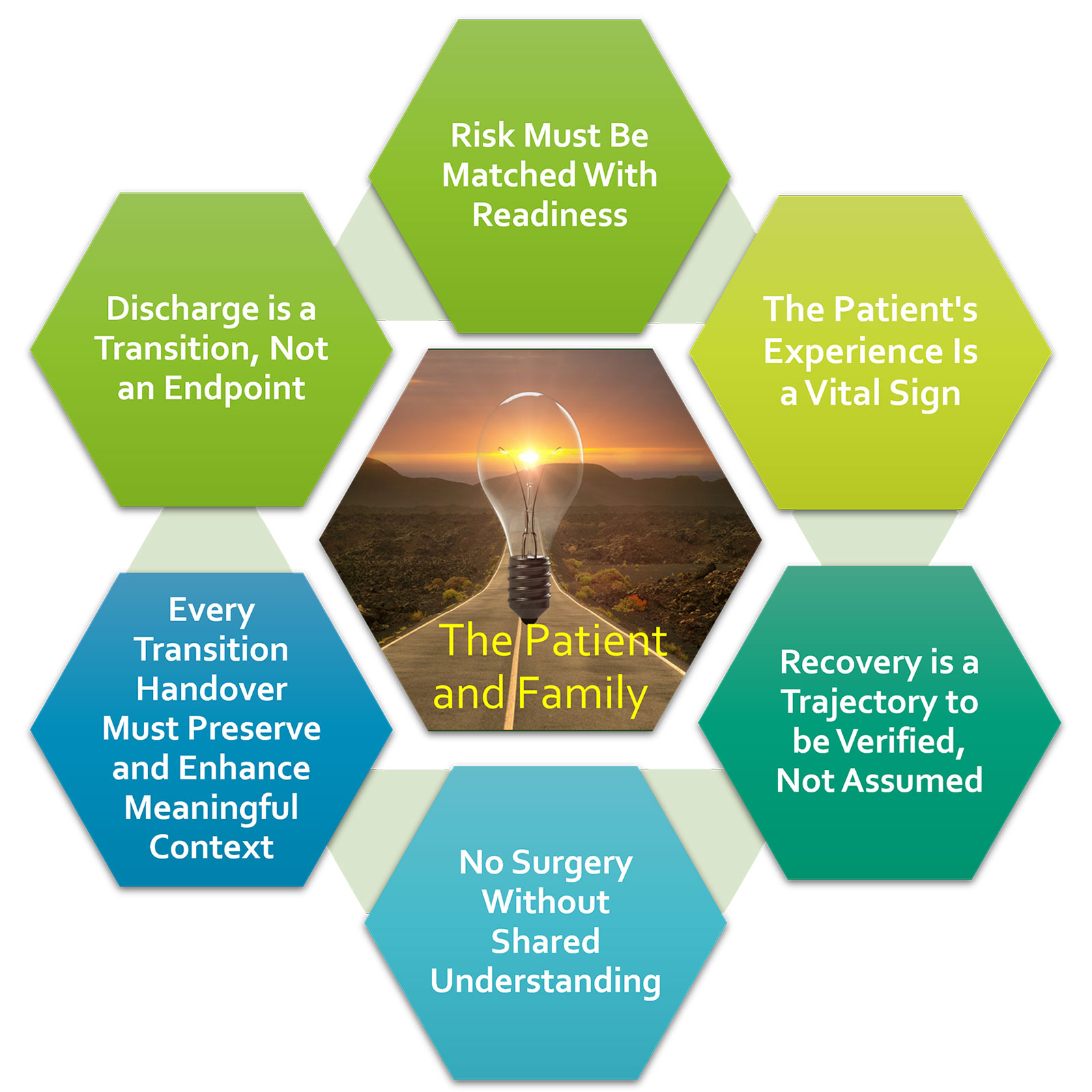
Figure 1. Six Axioms for Perioperative Patient Safety for the 2026 Stoelting Conference.
DISCHARGE IS A TRANSITION, NOT AN ENDPOINT
Our responsibility continues as care moves forward. Care does not end when the patient leaves the operating room or the hospital. Safety depends upon continuity – how effectively we prepare and support patients, families, and clinicians who will provide care for what comes next. Safety also depends on having systems in place for us to continuously learn from what happens after patients leave our direct care. Continuity challenges us to reconsider how we define and measure perioperative success.
RISK MUST BE MATCHED WITH READINESS
Risk assessment alone is insufficient. Safety depends on anticipating what a particular patient may need and ensuring that patients, families, clinicians, and systems are prepared to recognize and respond. The challenge is to translate raw data into meaningful knowledge—and that knowledge into readiness and action.
PATIENT AND FAMILY EXPERIENCE IS A VITAL SIGN
The patient’s voice is central to understanding safety. Patients and families often detect meaningful changes before they are apparent through conventional clinical measures. Together, these perspectives are essential for clinical intelligence. Clinical measures also miss what can be of overriding importance to patients: fear, loneliness, confusion. We may be missing signals that matter to patients and their care not because they are absent, but because they are invisible, are difficult to measure, and because we have not yet learned to recognize them as safety signals.
NO SURGERY WITHOUT SHARED UNDERSTANDING
Safety requires clear communication, alignment, and a shared plan that goes beyond “informed consent.” Shared understanding is more than the effort of gaining agreement between clinicians. Shared understanding must critically encompass the goals, expectations, trade-offs, and recovery that matter to patients, families, and the entire perioperative team.
RECOVERY IS A TRAJECTORY TO BE VERIFIED, NOT ASSUMED
We must continuously confirm that recovery is unfolding as expected. Recovery is not an automatic consequence of a technically successful operation and/or anesthesia. Shifting our frame to a trajectory refocuses our attention on recovery as a continuous, active phase of perioperative care. Emerging technologies, continuous monitoring, biomarkers, patient-reported outcomes, and clinical judgment offer opportunities to recognize when recovery begins to diverge from expectations—while meaningful intervention is still possible.
EVERY TRANSITION HANDOVER MUST PRESERVE AND ENHANCE MEANINGFUL CONTEXT
Transitions are the glue throughout this longitudinal journey, carrying the data, knowledge, and context needed for coordinated, continuous, and safe care. Yet, some transition points may be overlooked or invisible during perioperative care. Even planned transitions can become frustrating fracture points for patients and clinicians when shared understanding and meaning are lost. Information transferred without context introduces risk. Context creates continuity, preserves meaning, and enables safe care.
Together, these axioms shift the frame from patient safety as a series of isolated events to patient safety as a dynamic process unfolding across the patient’s longitudinal journey. The six axioms are intentionally connected: each calls attention to something that may be missed when care is viewed only through the lens of an individual episode. They invite us to move beyond snapshots toward trajectories, beyond individual tasks toward relationships, and beyond static definitions of safety toward the ability to recognize, respond, and adapt as the patient’s journey unfolds.
This shift reframes our efforts by making the patient’s longitudinal journey the primary unit of analysis for research, improvement, and organizing care.
The goal of this year’s Stoelting Conference is not to achieve consensus on these six statements. It is to challenge prevailing assumptions and begin broader conversations about how patient safety must evolve to meet the complexity of modern perioperative care. These proposed axioms are offered as a starting point: intended to provide a conceptual framework, a common language for these conversations, and a foundation for future innovation, scholarship, and collaboration around the patient’s longitudinal journey. We look forward to the conversation.
Della M. Lin, MD, MS, FASA, chair, Stoelting Conference 2026, is associate faculty at Ariadne Labs, Boston, MA and adjunct clinical professor at John A. Burns School of Medicine, Honolulu, HI.
Della M. Lin is secretary of the Anesthesia Patient Safety Foundation.
Acknowledgments: The author wishes to acknowledge and express gratitude to the members of the Stoelting 2026 Steering Committee and moderators for their collaboration in co-designing this conference: Arney Abjeco, Vonda Vaden Bates, Desiree Chapell, Steven Coffee, Caoimhe Duffy, Brent Dunworth, Meghan Lane-Fall, Carol Peden, and May Pian Smith.
The author also wishes to deeply thank Caoimhe Duffy and May Pian Smith for their assistance in reviewing this editorial.
REFERENCES
- Bainbridge D, Martin J, Arango M et.al, Perioperative and anaesthetic-related mortality in developed and developing countries: a systematic review and meta-analysis. Lancet. 2012;380(9847):1075–1081. PMID: 22998717.
- Methangkool E, Cole DJ, Cannesson M. Progress in patient safety in anesthesia. JAMA. 2020;324(24):2485-2486. PMID: 33351053.
- Jackson AIR, Moonesinghe SR, Grocott MPW. Complications and consequences: short-term harm has long-term impact. BJA Open. 2023;8:100233. PMID: 37869058.