Presented September 4, 2025 at the 2025 APSF Stoelting Conference on “Transforming Maternal Care: Innovations and Collaborations to Reduce Morbidity and Mortality”

SUMMARY
Brian Bateman, MD’s presentation argues that anesthesiologists are uniquely positioned to become Peridelivery Physicians and significantly improve maternal safety. He contends that their extensive training in critical care, complex medical management (from ICU and general OR experience), and pharmacology gives them the skills necessary to lead quality improvement initiatives beyond just providing anesthesia. These initiatives should focus on four key areas: Presence (immediate response and longitudinal monitoring), Preemption (early risk screening and optimization), Proficiency (critical care leadership, pain management), and Platform (driving standardized care and quality review).
Key Points:
- Expanded Role: Peridelivery Physician
Anesthesiologists must reconceptualize their role beyond providing safe anesthesia to embracing the role of the Peridelivery Physician [00:34, 01:31]. Their training—including a full year of medicine/surgery and 4 months of ICU—equips them for the management of critically ill patients and co-morbidities that are leading causes of maternal mortality [02:13, 02:53]. - Leveraging Presence for Early Detection
Presence on the labor unit (24/7 or immediately available) allows anesthesiologists to longitudinally monitor patients and respond immediately [05:02, 05:09]. This presence can be leveraged to implement tools like charting a uterine tone score at 10 minutes post-delivery to pre-identify patients at high risk of hemorrhage (QBL >1500cc) [07:14, 07:35]. - Leading with Preemption and Screening
Preemption involves early intervention and risk assessment [08:20]. Anesthesiologists can help implement and utilize risk stratification tools, such as the Obstetric Co-morbidity Index (OBCMI), to identify high-risk patients who require pre-delivery optimization or heightened attention, thereby preventing deterioration [09:14, 11:43]. - Critical Care and Pain Proficiency
Proficiency focuses on leadership in critical care, resuscitation, massive transfusion, and complex co-morbidity management [12:00, 12:08]. Anesthesia expertise in analgesia is key for initiatives like rationalizing opioid prescribing post-cesarean delivery, which dramatically reduced discharge opioid use without reducing patient satisfaction with pain control [13:04, 15:34]. - Owning the Platform for QI
Platform involves leading broader quality initiatives, including: 1) Standardized Care Pathways (e.g., streamlined hypertension order sets to ensure time-to-treatment is under 60 minutes) [17:33, 18:36] and 2) Maternal Morbidity and Mortality Reviews [16:04, 17:04]. - Scaling Impact Nationally
Anesthesiologists should scale their work by serving on State Maternal Mortality Review Committees to bring a unique perspective on critical illness and pharmacology [20:14, 20:36], and by leading multidisciplinary guideline writing at the national level [21:47, 22:16].
ABOUT THE SPEAKER(S)
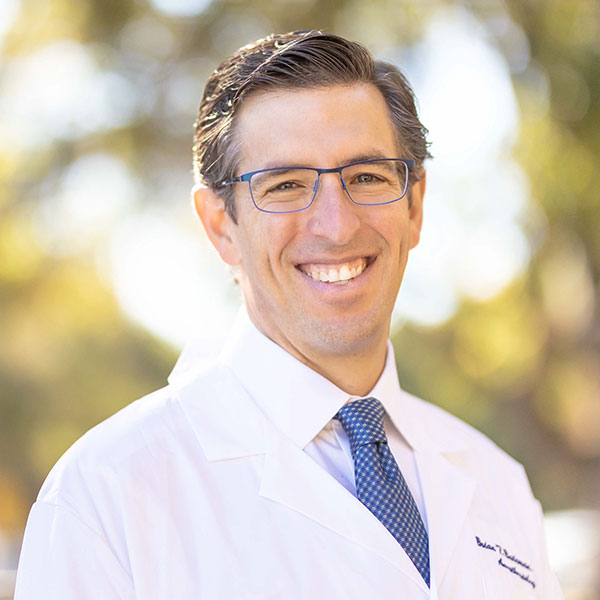 Brian Bateman, MD
Anesthesiology, Preoperative and Pain Medicine Endowed Professor,
Chair of the Department of Anesthesiology, Perioperative, and Pain Medicine,
Stanford University
Brian T. Bateman is the Anesthesiology, Preoperative and Pain Medicine Endowed Professor and Chair of the Department of Anesthesiology, Perioperative, and Pain Medicine. In this capacity, he oversees the clinical, educational, and research operations for a department with over 300 faculty and 150 trainees.
Before coming to Stanford, Bateman served as the Vice Chair for Faculty Development and Chief of the Division of Obstetric Anesthesia in the Department of Anesthesiology, Perioperative and Pain Medicine at the Brigham and Women’s Hospital/Harvard Medical School and as Co-Director of the Harvard Program on Perinatal and Pediatric Pharmacoepidemiology in the Division of Pharmacoepidemiology and Pharmacoeconomics, Department of Medicine, Brigham and Women’s Hospital.
Bateman’s scholarship focuses on the study of medication safety in pregnancy and on predictors and management of maternal morbidity. To address questions in these areas, Bateman and collaborators at Harvard helped pioneer the use of advanced epidemiological techniques applied to large, routinely collected healthcare utilization data. This research has been funded by multiple R01 grants from the NIH and by grants from the FDA and has been published in leading clinical journals including NEJM, JAMA, BMJ, Lancet, Annals of Internal Medicine, JAMA Pediatrics, JAMA Psychiatry, and Obstetrics and Gynecology. Bateman’s bibliography contains over 300 publications. This research is frequently cited in clinical reviews and guidelines and has prompted both the FDA and EMA to make labelling changes to medications regarding use in pregnancy. Bateman is also a founding member of the International Pregnancy Safety Study Consortium (InPress) which is a collaborative effort between investigators from the US and each of the five Nordic countries to pool data for studies evaluating the safety of medications.
Bateman currently serves as Chairperson of FDA’s Anesthetic and Analgesic Drug Products Advisory Committee after having previously served a 4-year term (2015-2019) as a voting member of this Committee. He was a technical advisor for the revision of the Joint Commission’s pain management standards. He has served on expert panels and workshops sponsored by the National Academy of Medicine, the FDA, the NIH, the CDC, and the Department of Health and Human Services, and on multiple grant review committees for the NIH and other funders. He is an Editor for the journal, Anesthesiology, and the textbook, Chestnut’s Obstetric Anesthesia: Principles and Practice.
Bateman’s work has been recognized by a number of awards including his selection by the Society for Obstetric Anesthesia and Perinatology as the Gerard Ostheimer lecturer and by the American Society of Anesthesiologists as the James E. Cottrell Presidential Scholar Awardee, which is given to one clinical-scientist each year within 10 years of initial faculty appointment for accomplishment in research.
Bateman is a Phi Beta Kappa graduate Yale College and received his MD from Columbia University College of Physicians & Surgeons, where he was a member of Alpha Omega Alpha and was awarded the Janeway Prize for the highest achievements and abilities in the graduating class. He completed an internship in internal medicine at Brigham and Women’s Hospital and residency and chief residency in anesthesiology at the Massachusetts General Hospital. He completed a Masters in Epidemiology at the Harvard School of Public Health, and a Masters in Business Administration from Imperial College London.