Presented September 3, 2025 at the 2025 APSF Stoelting Conference on “Transforming Maternal Care: Innovations and Collaborations to Reduce Morbidity and Mortality”

SUMMARY
Mahesh Vaidyanathan, MD, MBA’s presentation explores how technology can be a “force multiplier” to improve maternal health monitoring, care, and address disparities by overcoming resource limitations. The focus is on leveraging existing data from patient monitors and combining it with technologies like Artificial Intelligence (AI) and telemedicine to extend expert-level support into low-resource or rural areas. Examples include remote visualization of fetal monitors to facilitate real-time expert consultation and AI-assisted ultrasound scanning by non-expert personnel. The key to future data sharing and interoperability across health systems is the FHIR (Fast Healthcare Interoperability Resources) standard.
Key Points:
- Technology as a Force Multiplier
Technology, such as remote data visualization, can extend the capacity of experts to support care in under-resourced areas, addressing disparities within large counties or in rural institutions [01:14, 07:04]. - Remote Monitoring and Tele-Expertise
Fetal monitor data can be made visible anywhere in the world (de-identified) to allow for real-time consultation and rapid decision-making by remote obstetric specialists [01:33, 02:05]. - AI in Diagnostics
AI-driven ultrasound scanning can be deployed to enable non-expert staff, like nurses, to perform blind sweeps of the abdomen. The AI software analyzes the images to provide critical diagnoses (e.g., placenta location, gestational age) [03:32, 04:25]. - Predictive Algorithms
Algorithms are being developed to predict fetal heart rate decelerations with 8 to 10 minutes of lead time. This allows for the proactive direction of resources to mothers who need it before a crisis, potentially avoiding emergency Cesarean sections [05:42, 06:24]. - Future Data Standard
The FHIR (Fast Healthcare Interoperability Resources) standard is the essential future framework for transmitting and sharing healthcare data globally, allowing technology to consume and reproduce information from various monitoring devices [08:14, 09:15].
ABOUT THE SPEAKER(S)
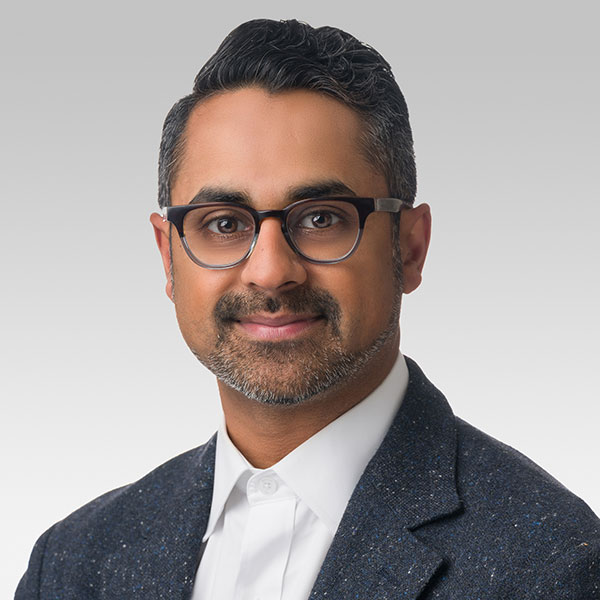 Mahesh Vaidyanathan, MD, MBA
Assistant Professor,
Northwestern University Feinberg School of Medicine
I am Board-certified by the American Board of Anesthesiology, and hold active medical licensure in the state of Illinois. I currently serve as an Assistant Professor of Anesthesiology at Northwestern University Feinberg School of Medicine and hold attending appointments at Northwestern Memorial Hospital, Palos Hospital, Central DuPage Hospital, and Ann & Robert H Lurie Children’s Hospital of Chicago. I serve as the Lead of the NMHC Office of Wellbeing Analytics team, the Clinical Liaison for patient monitoring for the hospital system, and the Clinical Lead for the deployment of Capsule Surveillance, our remote monitoring and waveform data acquisition system.
I co-lead the creation of the Digital Healthcare and Data Science Curriculum in the Feinberg School of Medicine. Along with David Leibovitz, MD, I helped create a curriculum to introduce our medical students to Data Science, Digital Health Care Tools, and Artificial Intelligence and Machine Learning in Medicine. We are one of the first medical schools to have a dedicated curriculum in the country.
I additionally hold multiple national leadership roles in the American Society of Anesthesiologists and serve on the Executive Committee and Board of Directors of the Society of Obstetric Anesthesiology and Perinatology.