Presented September 3, 2025 at the 2025 APSF Stoelting Conference on “Transforming Maternal Care: Innovations and Collaborations to Reduce Morbidity and Mortality”

SUMMARY
Ms. Miranda Klassen, a survivor of Amniotic Fluid Embolism (AFE), highlights the need for comprehensive support and resources for both patients and healthcare providers in the aftermath of severe maternal complications. She emphasizes the criticality of research and specimen collection to advance understanding of rare events like AFE. Her organization focuses on providing immediate crisis support, long-term mental health resources for survivors and grieving families, and practical tools (like simulation kits and clinical checklists) to improve frontline clinical preparedness and communication, particularly for anesthesia teams. The core message stresses the importance of community and validation for all involved in a traumatic event.
Key Points:
- Research and Specimen Need
Research for rare conditions like AFE is severely limited. Specimen collection is critical to identify biomarkers and understand the proteomics and metabolomics of the event, which is essential for improving diagnosis and treatment [09:42, 09:57]. The organization maintains the largest global registry of AFE cases [10:06]. - Provider Support and Second Victim Syndrome
The aftermath of traumatic events, such as a patient death, significantly impacts providers. The organization offers “caring for the carers” support, recognizing the heavy emotional toll and the need for a safe space and validation for clinicians to process trauma, exemplified by the tragic case of an anesthesiologist who took his own life [07:26, 25:15]. - Crisis Intervention and Resources
A comprehensive set of resources is provided to frontline staff, including an AFE Hotline (modeled after the Malignant Hyperthermia hotline) for real-time guidance during or after an event [14:54, 15:19]. They also offer a Simulation Toolkit and a clinical checklist to improve unit readiness and communication between nursing and anesthesia teams [10:49, 14:12]. - Patient-Centered Healing and Autonomy
Survivors require specialized help to unpack feelings of being “miraculous” or “grateful to be alive,” which often overshadow intense sadness, anger, and trauma [18:01, 18:13]. A Survivor Clinical Summary Form is provided to be completed by the clinical team, restoring patient autonomy by summarizing key events and interventions for continuity of long-term care [18:44, 18:57]. - Importance of Communication and Environment
Small environmental and communication changes can significantly reduce patient trauma, particularly for survivors undergoing subsequent deliveries. Examples include using a clear drape during C-sections so patients can see providers’ faces and covering ceiling tiles to avoid negative memory triggers from ICU stays [24:06, 24:17].
ABOUT THE SPEAKER(S)
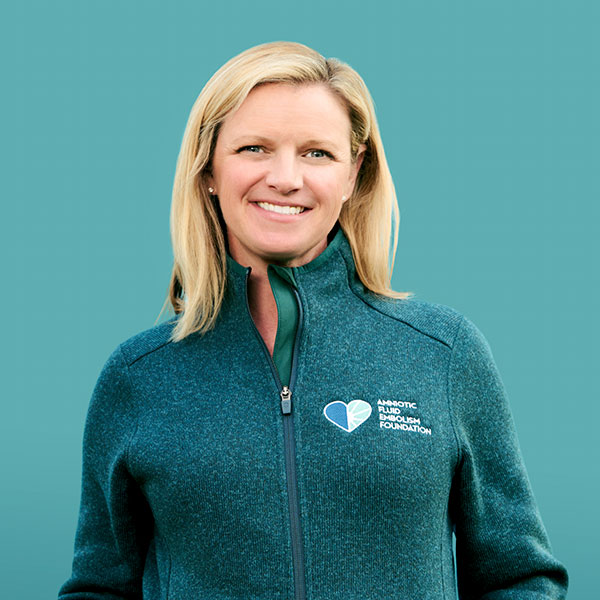 Ms. Miranda Klassen
Executive Director, AFE Foundation
Miranda Klassen is the Executive Director of the Amniotic Fluid Embolism Foundation, which she founded in 2008 after surviving an AFE during childbirth. She co-leads the AFE Registry, has published research on AFE and support during and after severe maternal events. Miranda lives in San Diego with her husband, Bryce, a critical care nurse, and their son, Van.