

APSF News & Updates

Suzetrigine Drug-Drug Interactions: Perioperative Anesthesia Considerations to Enhance Patient Safety
June 16, 2025
Pain management for surgical patients remains a critical challenge, especially in the context of an ongoing opioid epidemic. Opioids have long been the cornerstone of perioperative analgesia, but widespread use has contributed to…

Capitol Hill Briefing: Enhancing Patient Safety with Continuous Blood Pressure Monitoring
June 10, 2025
Watch the APSF livestream of the Tuesday, June 10, 2025 briefing on Capitol Hill with Members of Congress, healthcare professionals, and patient safety advocates discussing the urgent need to safeguard patients through Continuous Blood Pressure Monitoring during surgery.
APSF Newsletter – June 2025
June 1, 2025
The Anesthesia Patient Safety Foundation is pleased to announce the release of the June 2025 APSF Newsletter.
Safe and Deliberate Use of Oxymetazoline in the Pediatric Operating Room
May 22, 2025
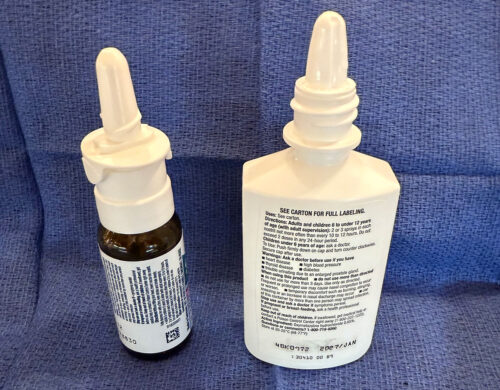
Oxymetazoline is a topical vasoconstrictor commonly administered in the operating room intranasally prior to nasotracheal intubation to reduce the risk of bleeding and enhance airway visualization. While used primarily for…

Ensuring Safety in Compounding: USP 797 Competency Assessments and Implications for Anesthesiology
May 21, 2025
Compounding medications is critical to healthcare delivery, especially in specialized fields such as anesthesiology, where custom formulations are often required to meet patient-specific needs. However, compounding errors can result in…

Minimally Invasive Photodynamic Bone Stabilization Complicated by Massive Pulmonary Embolism, Requiring Emergent VA-ECMO
May 16, 2025
The photodynamic bone stabilization system (PBSS) is an alternative to traditional orthopedic surgical options that uses a photosensitive monomer to fill a reamed bony canal and stabilize fractures or impending fractures…