 Back to all Culture of Safety Tactics
Resident Safety Badge Buddy Gave Trainees 24/7 Access to Safety and Well-being Resources


Overview

What was the reason for the change?
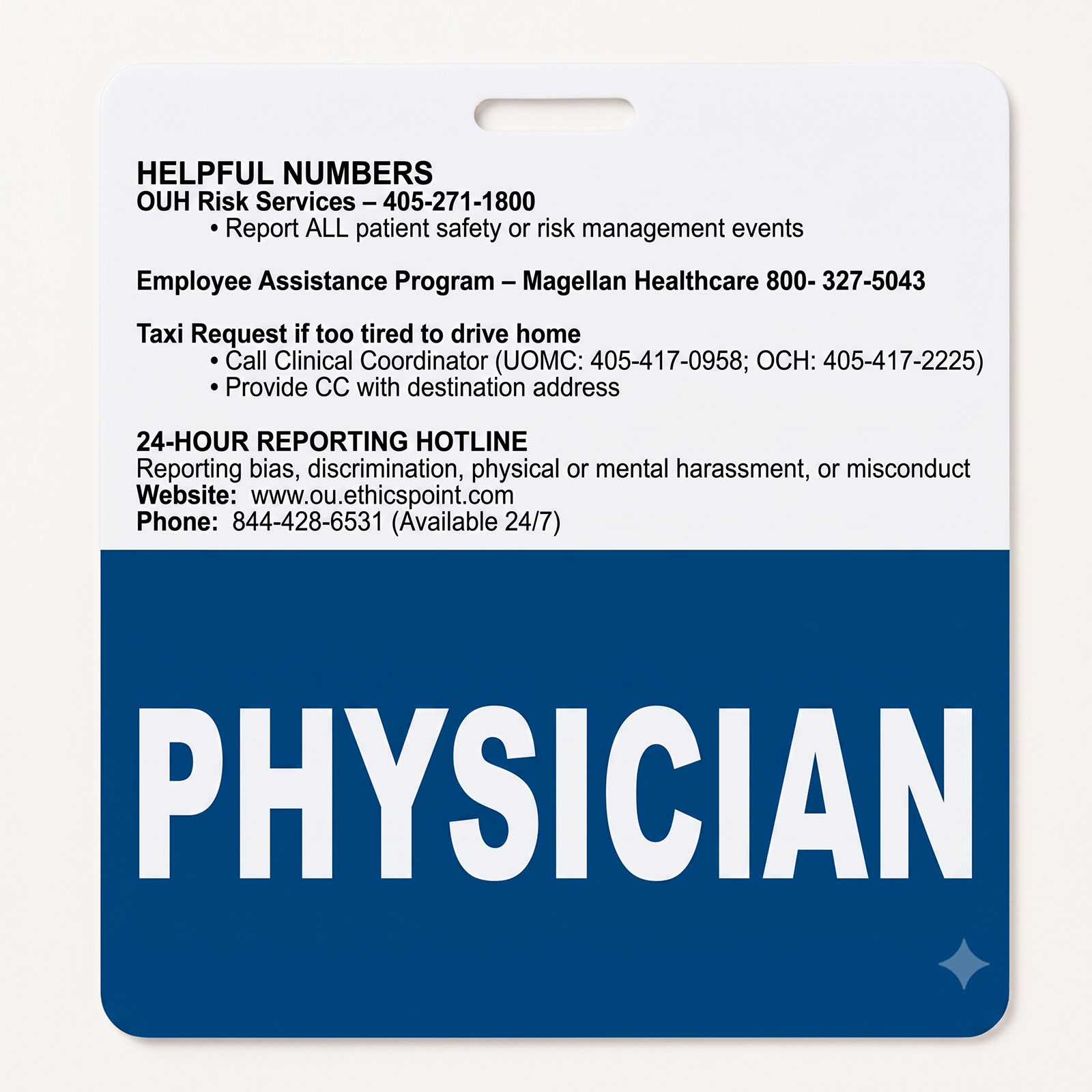
Organization (The University of Oklahoma Graduate Medical Education Office) wanted to improve resident access to safety/well-being resources and did so in the form of an easy-to-use and always available badge card.
What were we trying to accomplish?
We were trying to improve resident awareness/access to protocols regarding various clinician safety items, including how to contact risk management, how to request a free ride home from work if too fatigued to drive, how to access a reporting hotline for discrimination/physical or mental harassment, how to seek care after needle stick injury, and how to obtain EMR support.
How will we know that a change is an improvement?
We will know if this change is an improvement if we see increased utilization/awareness of these services by our trainees and/or by discussion and feedback from our trainees.
Implementation

How long did it take to get up and running?
This program was implemented and the badge cards were designed, printed, and distributed to residents during orientation. The badge cards have been adapted over several years and continue to be distributed each year during orientation.
How was readiness assessed & required resources identified?
This project required the collection of various protocols as discussed above. It also required some cost (printing of the badge cards, reimbursement to residents for rides home) as well as the attendance at resident orientations to educate about these resources.
What were the missteps and lessons learned along the way?
We found that it was sometimes important to reeducate our trainees mid-year about these available resources – orientation tends to be an information-heavy time, and some residents forget about the presence of these resource tips on their ID badges.
Solution Design

What changes can we make that will result in an improvement?
We can better educate our residents about available resources – this allows them to easily utilize these resources even during times (overnight, on weekends) when it may otherwise be more challenging to seek help.
What was your implementation strategy and critical steps?
We distributed these badge “buddies” to our trainees during their respective departmental orientations. We also had in-person discussions regarding utilization of these resources and provided contact information for departmental leadership and the GME office for further support.
Adoption & Sustainability

How did you communicate the tactic to those affected by it?
We distributed these badge cards during resident orientation as discussed, and we also notified the various involved parties (risk management, employee health, EMR support, etc).
How did you design for sustainability of the change?
We continue to adapt the badge cards with updated information, and we provide education for each entering residency class.
Downloadable Resource

Badge Buddy Template
Evidence & References

QI Journal Report
Leisa Burton, The University of Oklahoma Graduate Medical Education Office, personal communication, August 11-27, 2025
- cognitive aid
- onboarding
- orientation