 Articles
TO THE EDITOR
 The Anesthesia Patient Safety Foundation (APSF) remains a leading authority on contemporary issues in patient care. The October 2025 Newsletter article, Airway Safety in the OR and Beyond: Balancing Innovation and Safety by Tung and Klock, reflects this tradition of educational excellence in clinically relevant topics. However, patient positioning remains a fundamental core skill in airway management and could have been more prominently emphasized in the article.
Anesthesia professionals have long recognized the challenges of airway maintenance, and many agree with the authors’ view that “future focus should be on maintaining core skills.” To maintain a forward-looking approach, we should not neglect foundational skills from the past, especially the fundamental role of patient positioning in airway preservation.
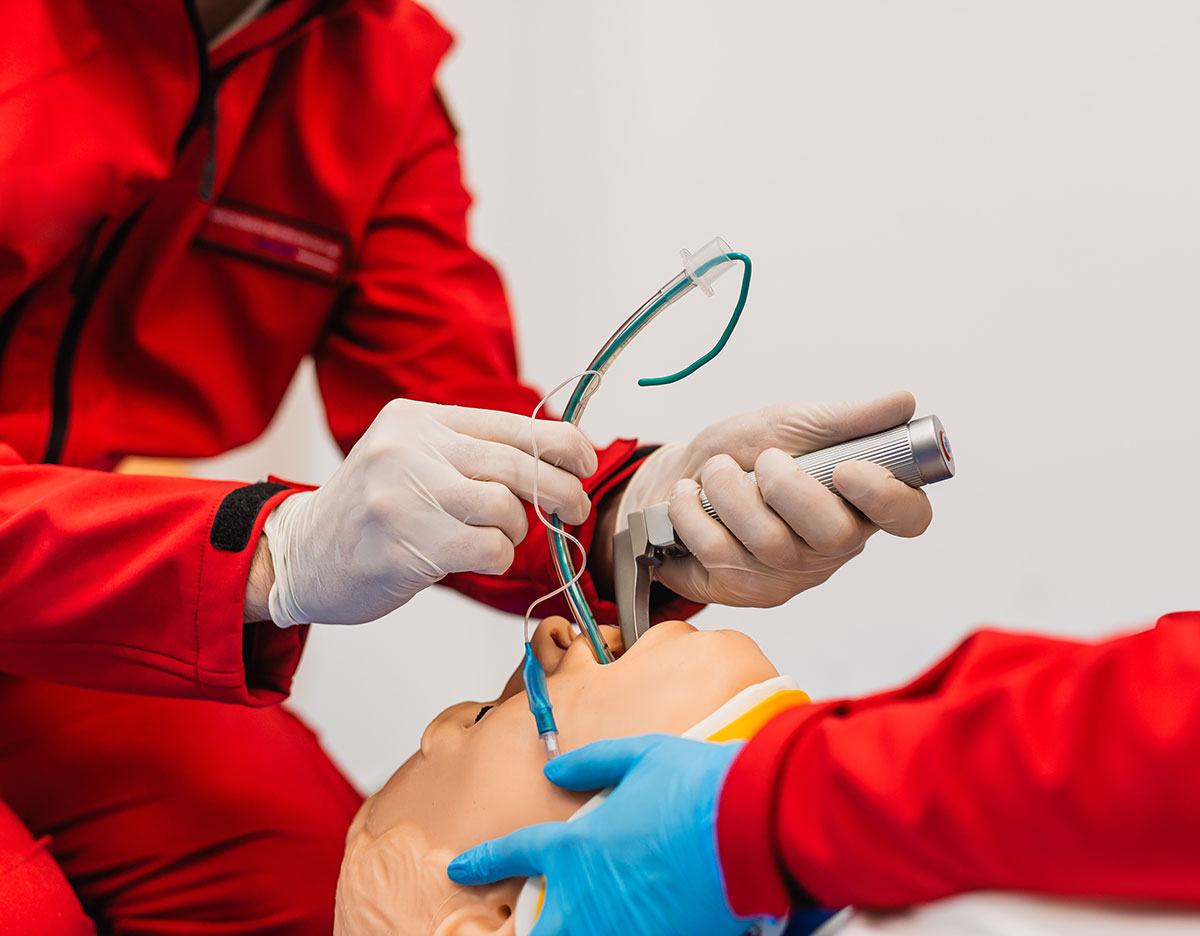
Successful endotracheal intubation depends primarily on visualization of the vocal cords during laryngoscopy. First-pass intubation success is not only a matter of technique, but is also a combination of the laryngoscopist’s skill and experience combined with proper patient positioning prior to intubation. Like any partnership, both elements are essential to produce a successful outcome. Unfortunately, many discussions of airway management underemphasize the role of patient positioning as a “core skill.” Optimal positioning of the head, neck, and upper torso directly influences mask ventilation, laryngoscopy view, and intubation success, yet often this contribution is minimized or omitted when new intubating devices are discussed.
A 2022 Anesthesia Patient Safety Foundation Newsletter update emphasized the time-sensitive nature of hypoxemia and the benefit of pre-oxygenation strategies to improve safety margins.1 The head-elevated laryngoscopy position can improve oxygenation and extend safe apnea time by reducing the risk or onset of hypoxia and providing critical latitude during intubation.2,3 Therefore, a pre-thought-out plan for patient positioning prior to laryngoscopy adds to the core skill of airway readiness. Positioning is not an afterthought; it is a core readiness skill and an essential part of airway safety.
Limitations of non-articulating tables and environmental constraints often prevent optimal airway positioning in NORA (non-operating room anesthesia) locations.4,5 Given the frequent use of deep sedation, especially in obese patients with associated co-morbidities such as obstructive sleep apnea, inadequate head positioning contributes significantly to respiratory complications. To improve oxygenation, increase the probability of first‐pass intubation success, and decrease intubation‐related adverse events (e.g., hypoxemia, airway trauma), many emergency airway algorithms note the importance of patient positioning prior to intubation.6-8
The authors note that while video-laryngoscopy and other new airway instruments have improved intubation success, their use may risk losing direct laryngoscopy skills. Optimal patient positioning remains essential even with the use of newer airway devices like video laryngoscopy. While innovative airway devices may appear to lessen the importance of pre-positioning, evidence shows that favorable head and neck alignment improves success across nearly all airway techniques, including mask ventilation, direct laryngoscopy, laryngeal mask airway placement, and video-laryngoscopy.9-11 Anticipating the need for intubation and establishing proper positioning should not be viewed as an either/or decision. Nor should it diminish the value of skilled laryngoscopy. Rather, when combined with modern airway technologies, proper positioning enhances the likelihood of a successful first-pass intubation.
Patient positioning is a fundamental element of airway safety in the OR and NORA environments. It is a central tenet of anesthesia training programs and a critical component of emergency airway algorithms. Despite this, the importance of proper positioning is often overlooked, underestimated, or “assumed” rather than explicitly taught, reinforced and referenced in publications regarding airway maintenance.
Head and neck positioning has long been recognized as essential for optimizing mask ventilation, improving laryngoscopy view, and increasing intubation success. In the context of video- laryngoscopy and other intubating devices, proper head elevation and alignment remain important adjuncts that enhance both visualization, intubation and patient safety.
As an early and indispensable airway skill, correct patient positioning should not only be taught but also continually recognized and practiced. Its enduring relevance in both routine and emergency situations cannot be overstated, and its omission or under-representation is a critical gap in airway safety education and practice.
James M. Gayes, MD is a retired anesthesiologist specializing in cardiac anesthesia at Abbott Northwestern Hospital in Minneapolis, Minnesota.
James M. Gayes, MD is the founder of OPAD Airway Inc., a start-up medical device company. Dr. Gayes is co-inventor on patents covering an inflatable patient adjustment device and has equity in the company but does not receive any royalties or professional financial renumeration. The company has no commercial product.
REFERENCES
- Fiadjoe JE, Mercier D. Anesthesia Patient Safety Foundation update: 2022 American Society of Anesthesiologists practice guidelines for management of the difficult airway. APSF Newsletter. 2022; 37:47–53. 2022.
- de Carvalho, C., Iliff, H. A., Santos Neto, J. M., Potter, T., Alves, M. B., Blake, L. & El-Boghdadly, K. (2024). Effectiveness of preoxygenation strategies: a systematic review and network meta-analysis. British Journal of Anaesthesia, 133(1), 152–163.https://doi.org/10.1016/j.bja.2024.
- Tsan, S. E. H., Viknaswaran, N. L., Lau, J., Cheong, C. C., & Yin Wang, C. (2022). Effectiveness of preoxygenation during endotracheal intubation in a head-elevated position: a systematic review and meta-analysis of randomized controlled trials. Anaesthesiol Intensive Ther, 54(5), 413–424. https://doi.org/10.5114/ait.2022.123197.
- Primm A, Anca D. Updates in Non-Operating Room Anesthesia. Current Opinion in Anesthesiology 38(3):p 297-302, June 2025.
- Nørskov AK. Preoperative airway assessment – experience gained from a multicenter cluster randomized trial and the Danish Anesthesia Database. Dan Med J. 2016 May;63(5): B5241. PMID: 27127020.
- Frerk C, Mitchell VS, McNarry AF, et al. Difficult Airway Society 2015 guidelines for management of unanticipated difficult intubation in adults. Br J Anaesth. 2015;115(6):827–848.doi:10.1093/bja/aev371.
- American Society of Anesthesiologists Task Force on Management of the Difficult Airway. Practice Guidelines for Management of the Difficult Airway: An Updated Report. 2022.
- Apfelbaum JL, Hagberg CA, Connis RT, Abdelmalak BB, Abdelmalak JB, Agarkar M, et al.
2022 American Society of Anesthesiologists Practice Guidelines for Management of the Difficult Airway: An Updated Report by the American Society of Anesthesiologists Task Force on Management of the Difficult Airway. 2022;136(1):31–81. - Kim EH, Lee JH, Song Effect of head position on laryngeal visualization with the McGrath MAC video laryngoscope in pediatric patients: A randomized controlled trial. Eur J Anaesthesiol 2016 Jul;33(7):528-34. PMID: 26986776.
- Pournajafian A, Pokhtabnk MA, Ghodrathy M. Success rate of airway devices insertion: laryngeal mask airway versus supraglottic gel device. Anesthesiology and Pain Medicine, 29 Mar 2015, 5(2): Corpus ID: 9999503.
- Ramachandran KS, Mathis MR, Tremper KK, Shanks AM, Kheterpal S. Predictors and Clinical Outcomes from Failed Laryngeal Mask Airway Unique™: A Study of 15,795 PatientsPerioperative Medicine. June 2012 Volume 116, Issue 6, June 2012. Anesthesiology 2012; 116:1217–1226.