


 PDF
PDFINTRODUCTION
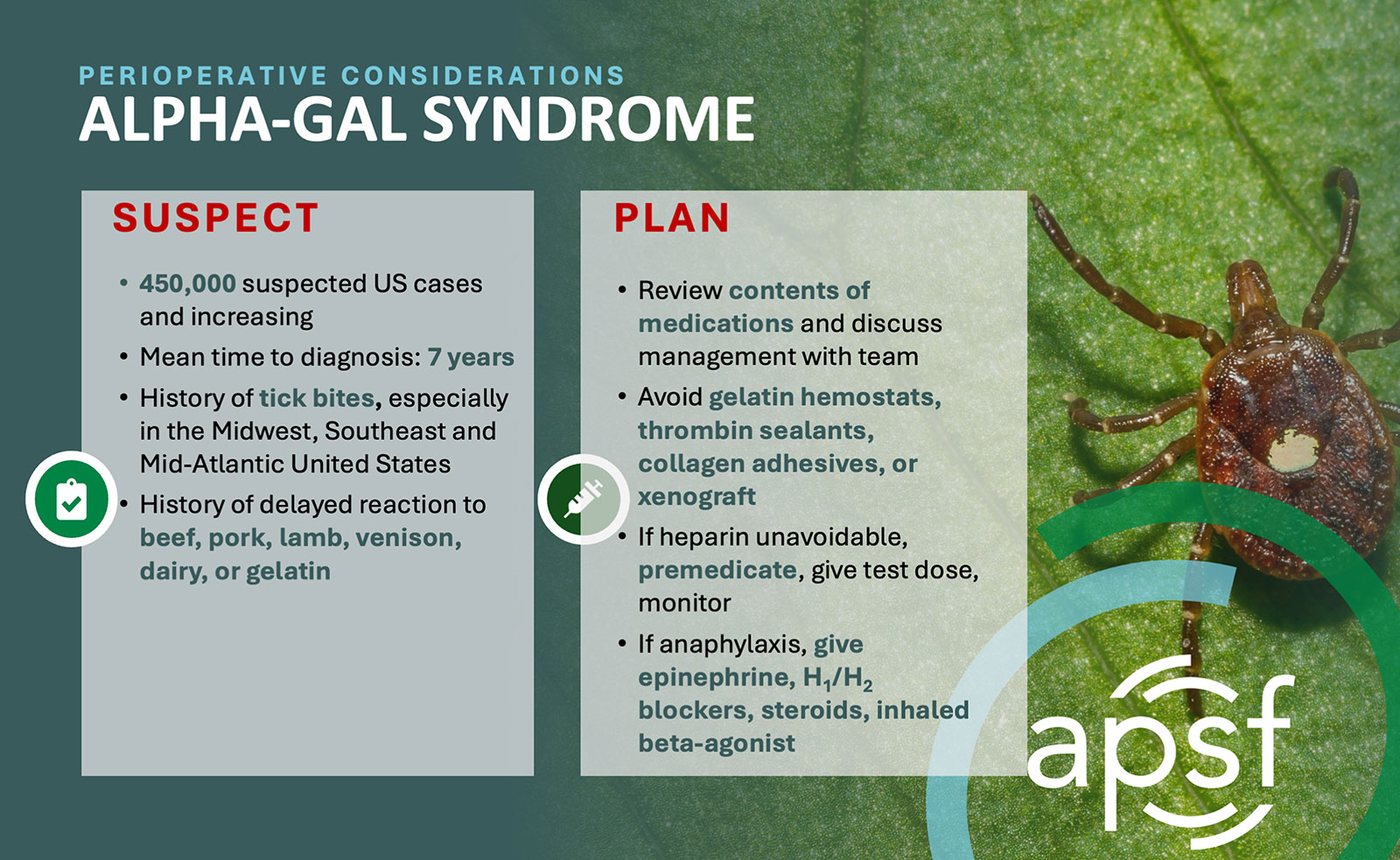
Alpha-gal Syndrome (AGS) is an IgE-mediated allergy to galactose-α-1,3-galactose (“alpha-gal”), a carbohydrate present in non-primate mammalian tissues. AGS commonly presents as a new onset allergy to red meat after a Lone Star tick (Amblyomma amercanum) bite. It was discovered in the early 2000s after patients in North Carolina, Arkansas, Virginia, and Tennessee began experiencing severe allergic reactions to cetuximab.1 These patients were subsequently found to have IgE antibodies specific for alpha-gal.2 After investigators compared geographic distributions of patients with similar exposures and reactions to those with Rocky Mountain Spotted Fever, subsequent investigations discovered that the Lone Star tick is responsible for injecting the alpha-gal epitope into humans.1 Over the past decade, the incidence of AGS has risen sharply, with as many as 450,000 suspected cases in the United States.3 The highest concentration of cases have been reported across the Midwest, Southeast, and Mid-Atlantic regions of the United States.4
Since humans lack the enzyme to produce alpha-gal, the immune system recognizes it as foreign and produces IgE antibodies against it.5 Subsequently, eating red meat (beef, pork, lamb, or venison) or even dairy products can trigger a hypersensitivity reaction ranging from urticaria to vague gastrointestinal symptoms to anaphylaxis.6
For anesthesia professionals, AGS introduces a unique set of patient safety challenges. Many commonly used perioperative medications, like some formulations of propofol emulsion and surgical materials, may contain mammalian-derived substances that can trigger severe allergic reactions. Increasing awareness and establishing systematic approaches to identification, screening, and safe medication selection can improve perioperative safety for this patient population.
THE PERIOPERATIVE SETTING: CHALLENGES AND OPPORTUNITIES
The perioperative setting represents a uniquely high-risk environment for patients with AGS due to the frequency, route, and rapidity of exposure to potential mammalian-derived allergens. Unlike ambulatory or outpatient settings, perioperative care involves the near-simultaneous administration of multiple intravenous medications and surgical products, often under time-pressured conditions, increasing the likelihood of unintentional exposure and limiting the ability to identify the offending agent if a reaction occurs.7 In contrast to oral exposures, which may result in delayed or milder symptoms, intravenous exposure can produce abrupt cardiovascular collapse, bronchospasm, or refractory hypotension.8
Perioperative medication workflows often bypass the safety checks offered by the pharmacist. Medications potentially containing alpha-gal may be stocked in anesthesia carts or administered emergently without allergy cross-checks or real-time verification of ingredients. Surgical materials introduce additional exposure risks that may not be readily apparent to anesthesia teams.9 Limited clinician awareness of AGS and inconsistent institutional safeguards further compound this risk.10
Preoperative Evaluation
It is important to consider a variety of geographic and tick exposure risk factors in the preoperative assessment. While AGS has been reported on six continents, patients in the United States who live in or have recently visited areas with recognized AGS prevalence (Missouri, Arkansas, Kentucky, Tennessee, Kansas, Oklahoma, and Virginia) should be asked about tick bite exposure or concerning AGS symptoms.3,8 Food intolerances may raise suspicion for AGS; beef, lamb and pork allergies are most common and may be documented as “red meat allergy.” Dairy and mammalian-derived gelatin (commonly found in gummy bears and marshmallows) can also cause symptoms, albeit in a smaller proportion of patients.1,8,11 Food-consumption related reactions in AGS may present with delayed-onset anaphylaxis or gastrointestinal symptoms that occur several hours after mammalian product consumption, which can be mistaken for nonspecific intolerance.12 It is important to recognize that patients may not consistently react to all foods that contain alpha-gal, or with identical severity with each exposure. This may be related to alpha-gal concentrations in the ingested food or modulation of the digestion process from concomitant intake of alcohol or nonsteroidal anti-inflammatory drugs.8,13,14
A previous allergic reaction to certain medications or vaccines may heighten clinical concern for AGS. These medications include the following: cetuximab, an IgG monoclonal murine-derived antibody containing the alpha-gal oligosaccharide; heparin, an anticoagulant derived from porcine or bovine tissue; and snake antivenom (a sheep-derived antibody). Vaccines that contain a higher content of alpha-gal allergen via gelatin or bovine calf serum such as Zostavax, (the live varicella zoster vaccine), the measles, mumps, and rubella (MMR) vaccine, or yellow fever vaccine should also trigger concern.2,12,15-19
Apart from discussion with the patient, the anesthesia professional should check the patient’s allergy list as well as any prior listed diagnosis of AGS or new onset intolerance to meat. In nonurgent procedures where there is a high clinical suspicion for AGS based on history and clinical symptoms, it may be helpful to check an alpha-gal-specific IgE titer (LOINC Code 73837-7), which may be sent out to several large commercial laboratories. A positive titer is > 0.1 IU/mL or kU/L.8,20 Higher titers have been associated with an increased risk of experiencing an allergic reaction.15 Exact thresholds predicting clinical reactivity have not been established; some sources use a value as low as 2 IU/mL for a patient to be at high risk for anaphylaxis, while others use a higher cutoff of 50 IU/mL.8,14,15 It is worth noting that IgE levels do not remain static over time, and therefore an older IgE level may not be reflective of current susceptibility to mammalian products.7 Any positive titer in the presence of clinical symptoms should prompt referral to an allergist or immunologist. Elevated titers in the absence of symptoms may suggest that patients are alpha-gal sensitized, but do not have AGS and do not require avoidance of mammalian-derived products.21,22 Besides dietary modification, few treatments exist for AGS; however, omalizumab, itself a murine-derived monoclonal antibody, has been shown (off-label use) to improve tolerance to accidental alpha-gal exposure in a limited case series of symptomatic patients actively following an alpha-gal avoidance diet.23 When in doubt, the necessary preventive measures discussed below should be followed.
Anesthetic Planning
The management of patients with confirmed alpha-gal syndrome should be divided into two strategies: trigger avoidance for patients with known or high suspicion of being at risk of developing a reaction, and preparation for management of an allergic reaction.
First, as outlined above, it is helpful to collaborate with pharmacy to identify all medications to be used during the anesthetic and screen for the presence of mammalian-derived components. This is a time-intensive endeavor that may require contact with the manufacturer, as some common inactive ingredients that may contain alpha-gal may not only vary from one manufacturer to the other, but also from each of the manufacturer’s lot numbers. Inactive ingredients with the same name (e.g., glycerin) may also be plant-based or synthetic versus mammalian-derived. Due to this variability, maintenance of a reliable medication list becomes challenging, if not impossible.10 The anesthesia professional should also initiate an operating room team discussion to ensure avoidance of surgical products and adhesives that may contain mammalian products, such as collagen/thrombin-based adhesives, hemostatic agents, meshes, bioprosthetic heart valves, pericardial patches, and orthopedic implants (Table 1).8,15,24,25
Table 1. Perioperative Considerations for Alpha-Gal Syndrome: Common Medications and Surgical Materials
| Category | Agent or Material | Alpha-Gal Risk Assessment | Primary Source of Potential Exposure |
| Induction Medications | Propofol | Potential risk | Formulation ingredients may vary by manufacturer (Diprivan®, Fresenius Kabi, does not contain mammalian-derived glycerin) |
| Etomidate, Ketamine, Fospropofol, Barbiturates | No known risk | None identified | |
| Inhaled Anesthetics | Volatile anesthetic agents | No known risk | None identified |
| Pain Management | Oral opioid formulations | Potential risk | Animal-derived inactive ingredients may be present |
| Acetaminophen formulations | Potential risk | Inactive ingredients may vary by manufacturer | |
| Gabapentinoid formulations | Potential risk | Animal-derived inactive ingredients may be present | |
| Neuromuscular Blockade | Muscle relaxants | Potential risk | Formulation-specific inactive ingredients |
| Other Perioperative Agents | Lipid emulsions (e.g., Intralipid) | Potential risk | Product-specific inactive ingredients |
| Anticoagulation | Heparin | High potential risk | Porcine-derived active ingredient |
| Enoxaparin | Potential risk | Porcine-derived active ingredient; generally lower risk than heparin | |
| Fondaparinux | No known risk | Synthetic formulation | |
| Implants and Surgical Materials | Mechanical heart valves | No known risk | Nonbiologic material |
| Gelatin-based hemostatic matrices/foams | High potential risk | Gelatin derived from mammalian sources | |
| Mammalian xenograft tissues | High potential risk | Mammalian tissue components | |
| Expanded polytetrafluoroethylene (ePTFE; Gore-Tex®) grafts | No known risk | Synthetic material | |
| Thrombin-containing sealants or glues | High potential risk | Animal-derived thrombin components | |
| Note: Risk classification reflects the potential for alpha-gal exposure based on active ingredients or inactive ingredients and may vary by manufacturer and formulation. Product-specific verification is recommended before perioperative administration. | |||
| Category | Induction Medications |
| Agent or Material | Propofol |
| Alpha-Gal Risk Assessment | Potential risk |
| Primary Source of Potential Exposure | Formulation ingredients may vary by manufacturer (Diprivan®, Fresenius Kabi, does not contain mammalian-derived glycerin) |
| Category | Induction Medications |
| Agent or Material | Etomidate, Ketamine, Fospropofol, Barbiturates |
| Alpha-Gal Risk Assessment | No known risk |
| Primary Source of Potential Exposure | None identified |
| Category | Inhaled Anesthetics |
| Agent or Material | Volatile anesthetic agents |
| Alpha-Gal Risk Assessment | No known risk |
| Primary Source of Potential Exposure | None identified |
| Category | Pain Management |
| Agent or Material | Oral opioid formulations |
| Alpha-Gal Risk Assessment | Potential risk |
| Primary Source of Potential Exposure | Animal-derived inactive ingredients may be present |
| Category | Pain Management |
| Agent or Material | Acetaminophen formulations |
| Alpha-Gal Risk Assessment | Potential risk |
| Primary Source of Potential Exposure | Inactive ingredients may vary by manufacturer |
| Category | Pain Management |
| Agent or Material | Gabapentinoid formulations |
| Alpha-Gal Risk Assessment | Potential risk |
| Primary Source of Potential Exposure | Animal-derived inactive ingredients may be present |
| Category | Neuromuscular Blockade |
| Agent or Material | Muscle relaxants |
| Alpha-Gal Risk Assessment | Potential risk |
| Primary Source of Potential Exposure | Formulation-specific inactive ingredients |
| Category | Other Perioperative Agents |
| Agent or Material | Lipid emulsions (e.g., Intralipid) |
| Alpha-Gal Risk Assessment | Potential risk |
| Primary Source of Potential Exposure | Product-specific inactive ingredients |
| Category | Anticoagulation |
| Agent or Material | Heparin |
| Alpha-Gal Risk Assessment | High potential risk |
| Primary Source of Potential Exposure | Porcine-derived active ingredient |
| Category | Anticoagulation |
| Agent or Material | Enoxaparin |
| Alpha-Gal Risk Assessment | Potential risk |
| Primary Source of Potential Exposure | Porcine-derived active ingredient; generally lower risk than heparin |
| Category | Anticoagulation |
| Agent or Material | Fondaparinux |
| Alpha-Gal Risk Assessment | No known risk |
| Primary Source of Potential Exposure | Synthetic formulation |
| Category | Implants and Surgical Materials |
| Agent or Material | Mechanical heart valves |
| Alpha-Gal Risk Assessment | No known risk |
| Primary Source of Potential Exposure | Nonbiologic material |
| Category | Implants and Surgical Materials |
| Agent or Material | Gelatin-based hemostatic matrices/foams |
| Alpha-Gal Risk Assessment | High potential risk |
| Primary Source of Potential Exposure | Gelatin derived from mammalian sources |
| Category | Implants and Surgical Materials |
| Agent or Material | Mammalian xenograft tissues |
| Alpha-Gal Risk Assessment | High potential risk |
| Primary Source of Potential Exposure | Mammalian tissue components |
| Category | Implants and Surgical Materials |
| Agent or Material | Expanded polytetrafluoroethylene (ePTFE; Gore-Tex®) grafts |
| Alpha-Gal Risk Assessment | No known risk |
| Primary Source of Potential Exposure | Synthetic material |
| Category | Implants and Surgical Materials |
| Agent or Material | Thrombin-containing sealants or glues |
| Alpha-Gal Risk Assessment | High potential risk |
| Primary Source of Potential Exposure | Animal-derived thrombin components |
| Note: Risk classification reflects the potential for alpha-gal exposure based on active ingredients or inactive ingredients and may vary by manufacturer and formulation. Product-specific verification is recommended before perioperative administration. | |
In cases where perioperative parenteral anticoagulation administration is unavoidable (such as in cardiac surgeries or initiation of extracorporeal membrane oxygenation), clinicians can consult a risk stratification algorithm based on urgency of the case and preoperative alpha-gal IgE titers, if available.8,26 Patients with lower titers (<8 kU/L) or those with medium-range titers (8-50 kU/L) requiring urgent/emergent surgery should be premedicated with prednisone/hydrocortisone, diphenhydramine and cetirizine, followed by a loading dose challenge of heparin 10 units/kg and observation for 15 minutes to ensure no reaction. In the setting of no reaction, cautiously proceeding with the remainder of the heparin dose is recommended; in the setting of an adverse reaction or high IgE titers, the authors recommend switching to argatroban or bivalirudin.27
In scenarios where there is no reasonable anticoagulant alternative, or in patients with IgE levels > 50 kU/L, rapid heparin desensitization has been described in case reports.28 A patient undergoing cardiac surgery with high alpha-gal IgE titers and a demonstrated reaction to a heparin flush received histamine-1 (H1) and histamine-2 (H2) blocker premedication, followed by stepwise escalating doses of parenteral heparin under careful monitoring in an intensive care unit with 1:1 nursing and an anaphylaxis kit at bedside. While this limited study reported successful outcomes using this method with no differences in subsequent heparin doses administered (guided by activated clotting time), it was an energy-intensive process requiring multidisciplinary collaboration and continuous monitoring. It is not a proven or risk-free method, thus, should only be performed under extreme circumstances, while ensuring that the heparin subsequently administered in the operating room be from the same lot as that used for desensitization.
Anaphylaxis
Even with the utmost care and preparation, the anesthesia professional should remain vigilant for any signs of an allergic reaction and be prepared to treat it should one occur. Depending on the severity of the reaction, administration of corticosteroids, H1– and H2-blockers, inhaled beta-agonists, and epinephrine may be necessary. A serum tryptase level should be obtained within 30 minutes to 2 hours of a reaction.
Postanesthesia care
Postoperative management of patients with AGS requires ongoing vigilance and clear communication with all care teams. During recovery and after discharge, patients should avoid medications contained within mammalian-derived gelatin capsules. Delayed reactions may still occur hours after medications have been given orally.5 Patients should be allowed to use their home medications when possible, as hospital-supplied formulations may contain mammalian-derived components not present in the patient’s medications.14 Patients should be monitored closely for delayed hypersensitivity reactions, including gastrointestinal symptoms, which may be subclinical AGS symptoms rather than routine postoperative nausea. Unfortunately, no proven treatments exist to help mitigate these symptoms, which may be hard to distinguish from expected postsurgical pain after abdominal procedures. Thorough documentation of AGS in the allergy list and discharge summary is essential to ensure future encounters are managed safely and consistently.
SYSTEMS LEVEL AND INSTITUTIONAL RECOMMENDATIONS
Electronic Medical Record (EMR)
Utilizing the EMR in screening for alpha-gal patients could benefit anesthesia professionals. Many patients who suffer from AGS have multiple allergies listed in the EMR. Some may not be true allergies, and some may instead represent sensitivities to inactive ingredients in medications as opposed to the medication itself. Therefore, the allergy documentation in the EMR could be used to alert providers of a potential patient with AGS. Additionally, these alerts should appear in highly visible spaces in the EMR for proper perioperative care.
Interestingly, the only ICD-10 code associated with AGS is “Z91.014—allergy to mammalian meat.” This nonspecific diagnosis code may confuse health care professionals and fail to trigger AGS precautions. Given that the mean time to AGS diagnosis is seven years, AGS can easily be missed if clinicians depend solely on coded diagnoses in patients’ histories.29
Pharmacy and Supply Chain
Pharmacy services play a pivotal role in the care of AGS patients in the perioperative setting. This starts with the provision of an institutionally decided upon safe process for allergy assessment and risk stratification along with medication ingredient screening, distribution, and administration. Priority should be placed on product standardization to those currently known not to contain alpha-gal when possible (e.g., Diprivan®, Fresenius Kabi, which does not contain mammalian-derived glycerin), understanding that inactive ingredients may change at any time without disclosure from the manufacturer. This reason, among others that impact product procurement such as drug shortages, makes it challenging to maintain an accurate list. Additionally, clinicians often fail to understand the inherent vulnerabilities of using an outdated list. National initiatives being led by organizations like Alpha-gal Alliance and Pill Clarity advocating for the improved labeling and dissemination for mammalian-derived components reinforce the need for manufacturer-initiated excipient transparency.
FUTURE DIRECTIONS
Future efforts to improve perioperative safety for patients with AGS should focus on standardized manufacturer labeling of medications with mammalian-derived components, improving the coding and documentation of AGS diagnoses, and characterizing reaction patterns to better understand perioperative risk. Current medication labeling practices do not help anesthesia professionals discern whether a certain medication is safe to administer to a patient with AGS, and referencing manufacturer specific formulations requires pharmacist consultation. Future coding systems should distinguish AGS explicitly rather than relying on the broader ICD-10 code “Z91.014—allergy to mammalian meat.” Future studies will help characterize perioperative outcomes for patients with AGS and reaction types, so that we better understand problematic medications and exposures. Systematic evaluation of desensitization protocols is warranted to determine how these strategies may be integrated safely into perioperative workflows. Ultimately, consensus guidelines on standardized perioperative pathways for AGS patients will be needed and incorporated into institutional protocols.
CONCLUSION
AGS has emerged as an important and growing perioperative safety concern. The procedural setting poses significant hazards where AGS patients may be exposed to many potential triggering agents. Safe care for AGS patients will hinge on multidisciplinary collaboration between anesthesiology, allergy, surgery, nursing and pharmacy teams. With well-coordinated preoperative planning, and preparation for both immediate and delayed reactions, anesthesia professionals can markedly reduce risks to susceptible patients.
Govind Rangrass, MD, FASA, is a professor of anesthesiology and critical care at SSM Health Saint Louis University Hospital, Saint Louis, MO.
Karolina Brook, MD, FASA, CPPS, is an anesthesiologist in the Department of Anesthesiology at Boston Medical Center, Boston, MA, and an assistant professor in the Department of Anesthesiology, Boston University Chobanian and Avedisian School of Medicine, Boston, MA.
Maziar M. Nourian, MD, is an assistant professor of anesthesiology and perioperative medicine at the University of California Los Angeles, Los Angeles, CA.
Rachel C. Wolfe, PharmD, MHA, BCCCP, FCCP, is a perioperative clinical pharmacy specialist at Barnes-Jewish Hospital, Saint Louis, MO.
The authors report no conflicts of interest.
Acknowledgments: We would like to acknowledge Dr. Mamta Chura, MBBS, assistant professor of anesthesiology at the Medical College of Georgia, Augusta, GA, for contributing to this article.
REFERENCES
- Platts-Mills TAE, Gangwar RS, Workman L, Wilson JM. The immunology of Alpha-Gal Syndrome: history, tick bites, IgE, and delayed anaphylaxis to mammalian meat. Immunol Rev. 2025;332:e70035. PMID: 40515672.
- Chung CH, Mirakhur B, Chan E, et al. Cetuximab-induced anaphylaxis and IgE specific for galactose-alpha-1,3-galactose. N Engl J Med. 2008;358:1109–1117. PMID: 18337601.
- Thompson JM, Carpenter A, Kersh GJ, et al. Geographic distribution of suspected Alpha-Gal Syndrome cases — United States, January 2017–December 2022. MMWR Morb Mortal Wkly Rep. 2023;72:815–820. PMID: 37498787.
- Platts-Mills TAE, Li RC, Keshavarz B, et al. Diagnosis and management of patients with the Alpha-Gal Syndrome. J Allergy Clin Immunol Pract. 2020;8:15–23 e1. PMID: 31568928.
- Steinke JW, Platts-Mills TA, Commins SP. The alpha-gal story: lessons learned from connecting the dots. J Allergy Clin Immunol.2015;135:589–596; quiz 597. PMID: 25747720.
- Wilson JM, Erickson L, Levin M, et al. Tick bites, IgE to galactose-alpha-1,3-galactose and urticarial or anaphylactic reactions to mammalian meat: the Alpha-Gal Syndrome. Allergy. 2024;79:1440–1454. PMID: 38193233.
- Leder J, Diederich A, Patel B, et al. Perioperative considerations in Alpha-Gal Syndrome: a review. Cureus. 2024;16:e53208. PMID: 38425598.
- Nourian MM, Stone CA, Jr., Siegrist KK, Riess ML. Perioperative implications of patients with alpha gal allergies. J Clin Anesth. 2023;86:111056. PMID: 36682226.
- Kuravi KV, Sorrells LT, Nellis JR, et al. Allergic response to medical products in patients with alpha-gal syndrome. J Thorac Cardiovasc Surg. 2022;164:e411–e424. PMID: 33933257.
- Carpenter A, Drexler NA, McCormick DW, et al. Health care provider knowledge regarding Alpha-Gal Syndrome — United States, March–May 2022. MMWR Morb Mortal Wkly Rep. 2023;72:809–814. PMID: 37498792.
- Mullins RJ, James H, Platts-Mills TA, Commins S. Relationship between red meat allergy and sensitization to gelatin and galactose-alpha-1,3-galactose. J Allergy Clin Immunol. 2012;129:1334–1342 e1. PMID: 22480538.
- Dunkman WJ, Rycek W, Manning MW. What does a red meat allergy have to do with anesthesia? Perioperative management of Alpha-Gal Syndrome. Anesth Analg. 2019;129:1242–1248. PMID: 29847378.
- Mehlich J, Fischer J, Hilger C, et al. The basophil activation test differentiates between patients with Alpha-Gal Syndrome and asymptomatic alpha-gal sensitization. J Allergy Clin Immunol. 2019;143:182–189. PMID: 30125663.
- Wolaver W, Thakrar S, Thomas K, et al. Demystifying Alpha-Gal Syndrome: identification and risk management in the perioperative setting. Curr Opin Anaesthesiol. 2021;34:761–765. PMID: 34636791.
- Hawkins RB, Wilson JM, Mehaffey JH, Platts-Mills TAE, Ailawadi G. Safety of intravenous heparin for cardiac surgery in patients with Alpha-Gal Syndrome. Ann Thorac Surg. 2021;111:1991–1997. PMID: 33031779.
- Koike C, Uddin M, Wildman DE, et al. Functionally important glycosyltransferase gain and loss during catarrhine primate emergence. Proc Natl Acad Sci U S A. 2007;104:559–64. PMID: 17194757.
- O’Neil BH, Allen R, Spigel DR, et al. High incidence of cetuximab-related infusion reactions in Tennessee and North Carolina and the association with atopic history. J Clin Oncol. 2007;25:3644–3648. PMID: 17704414.
- Stone CA, Jr., Hemler JA, Commins SP, et al. Anaphylaxis after zoster vaccine: implicating alpha-gal allergy as a possible mechanism. J Allergy Clin Immunol. 2017;139:1710–1713 e2. PMID: 27986511.
- Straesser M, Keshavarz B, Borish L, et al. Alpha-gal on Crotalidae-polyvalent Fab antivenom (CroFab): investigating the relevance to immediate hypersensitivity reactions. J Allergy Clin Immunol Pract. 2021;9:1015–1017 e1. PMID: 33122101.
- Centers for Disease Control and Prevention. Clinical Diagnosis and Testing. January 5, 2026. Available at: https://www.cdc.gov/alpha-gal-syndrome/hcp/diagnosis-testing/index.html Accessed 6/17/2026.
- Rinehart CD, Wang K, LoBue C, et al. Perioperative considerations for a patient with Alpha-Gal Syndrome undergoing cardiac surgery. J Cardiothorac Vasc Anesth. 2025;39:2516–2523. PMID: 40414792.
- Zvara J, Smith AL, Mazzeffi MA, et al. Alpha-Gal Syndrome and cardiac surgery. J Cardiothorac Vasc Anesth. 2024;38:2805–2811. PMID: 39097488.
- Commins S. Omalizumab reduces food allergy symptoms in patients with alpha-gal syndrome. J Allergy Clin Immun. 2020;145:AB145. doi:10.1016/j.jaci.2019.12.468.
- Nwamara U, Kaplan MC, Mason N, Ingemi AI. A retrospective evaluation of heparin product reactions in patients with alpha-gal allergies. Ticks Tick Borne Dis. 2022;13:101869. PMID: 34798527.
- Sell-Dottin K, Sola M, Caranasos T. Impact of newly emerging alpha-gal allergies on cardiac surgery: a case series. Clin Surg. 2017;2:1477.
- Rutherford ME, Stone CA, Kahwash BM, et al. Successful implementation of a multidisciplinary safety protocol in patients with Alpha-Gal Syndrome receiving parenteral anticoagulation: a case series. JCA Adv. 2024;1(3–4):100074. https://doi.org/10.1016/j.jcadva.2024.100074
- Hasegawa K, Powers EM, Yoneda ZT, et al. Importance of Alpha-Gal Syndrome in patients undergoing catheter ablation. HeartRhythm Case Rep. 2023;9:926–928. PMID: 38204822.
- McRae AS, Tidwell WP, Patel S, Lombard FW. Heparin desensitisation prior to cardiopulmonary bypass in a patient with alpha-gal allergy. Anaesth Rep. 2022;10:e12203. PMID: 36561536.
- Flaherty MG, Kaplan SJ, Jerath MR. Diagnosis of life-threatening alpha-gal food allergy appears to be patient driven. J Prim Care Community Health. 2017;8:345–348. PMID: 28447914.