
Purpose: This case report and review describe a patient who sustained a burn in the operating room secondary to an alcohol-based skin preparation. The purpose of the report is to inform anesthesia professionals that such burns may occur at great distance from the airway and in the absence of supplemental oxygen as the oxidizer.
Clinical Features: An obese adult patient underwent a femoral distal bypass graft under general endotracheal anesthesia. The skin was prepared and later re-prepared with an alcohol-based solution that may have saturated skin folds over time producing vapors under the drapes. A sterno-like fire burned the patients' leg after the vapors were exposed to the electrocautery.
Conclusions: Alcohol prep solutions are frequently used in the operating room. Certain precautions must be observed to prevent fires. Room air, trapped alcohol vapors, plus electrocautery are sufficient to produce a fire. This case illustrates that such events may occur far from the airway or an exogenous oxygen source.
The true incidence of operating room fires is unknown since there is no central reporting facility to track such data, and cases are underreported due to liability issues. The ECRI, an independent nonprofit health services agency, estimates about 100 such fires occur in the US annually.1 In June 2003 the Joint Commission on Accreditation of Healthcare Organizations (JCAHO) published a Sentinel Event Alert on surgical fires.2 Before the sentinel event alert all data regarding surgical fires were anecdotal and collected via multiple agencies with no single reporting mechanism.3
Anesthesia professionals are well aware of the possibility of operating room fires involving the airway, warming devices, and IV bags.4 The anesthesiology primary literature, texts, and presentations at professional meetings contain numerous reports and reviews of the phenomenon of airway fire.4-6 The risk of operating room fire from alcohol-based solutions has not been well-described in anesthesiology journals. Barker et al. reported experimental data and a case of a patient on supplemental oxygen who was burned from vaporized isopropyl alcohol prep in a "closed tent."7 In Barker's report the ignition source was electrocautery and the oxidizer was mask oxygen at 6 liters per minute. Although the fuel source was disputed in a subsequent letter to the editor by Bruley,8 there have been a few other reports of alcohol-based fires in the operating room.9 All of the reports thus far have involved fires in close proximity to an oxygen source near the airway.
We report the case of a patient undergoing a peripheral vascular procedure who sustained a 1% total body surface area burn after his skin was prepared with a 74% alcohol/iodophor liquid prep solution.
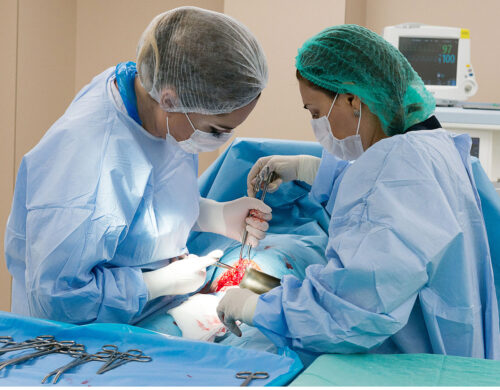
An obese, adult patient was scheduled as an outpatient for unilateral femoral distal bypass. The patient was taken to the OR and anesthesia was induced with midazolam, propofol, succinylcholine, and rocuronium. His trachea was orally intubated and anesthesia was maintained with sevoflurane and 30% oxygen. After intubation, the patient's leg was prepared with the 74% alcohol-based prep solution. Midway through the case the skin was reprepared. The surgeon reported a heat sensation briefly during the case. About two-thirds into the procedure, the surgical drapes ignited under the patient's left knee. Flames were extinguished immediately. Two oval burn areas behind the left knee were noted. The surgeon was present, completed surgery, and applied silversulfadiazine cream and dressing. The patient's neuromuscular blockade was reversed and his trachea was extubated. He was taken to the PACU in stable condition.
Consultation with a burn specialist was obtained postoperatively. The wounds included a 2nd degree burn to the left posterior thigh, 3 x 3 cm deep to full thickness; and a 2nd degree burn to the left posterior popliteal fold, 4 Yen 1 cm. The consultation assessment was that the patient had a less than 1% total body surface flame burn to the left lower extremity. Conservative management with silver sulfadiazine dressing changes was recommended with burn clinic follow-up.
Our search of the US Food and Drug Administration's (FDA) Manufacturer and User Device Experience (MAUDE) database, using the keywords alcohol and fire revealed that 25% of reports specifically associate alcohol-based solutions with surgical fires or patient burns. A recent closed claims anesthesiology report contrasted causes of burns prior to 1995 and subsequent to that date.4 The percentage of fires caused by cautery (excluding primary cautery burns) increased from about 12% to 19% over the study period. Thus, multiple data sources suggest that cautery fires and fires involving alcohol-based prep solutions are becoming more prevalent as a percentage of operating room fires. There are only a few reports in the anesthesiology literature of alcohol-based OR fires,7 and all occurred near the airway. The role of alcohol-based surgical prep solutions in operating room fires has been disputed.
Our case clearly illustrates that alcohol-based solutions can cause OR fires even in the absence of supplemental oxygen, and we report this case to inform anesthesia professionals and to underscore the importance of proper surgical prep in patient safety.
A combination of 3 factors involving alcohol or alcohol prep solutions can lead to fire or burns:
If these conditions occur, an electrocautery or other heat source may ignite the alcohol vapors. Both of these factors may have contributed to the fire in this case. The patient was obese, and solution may have pooled in skin folds or drape crease. Reprep of the skin may have exacerbated the pooling effect.
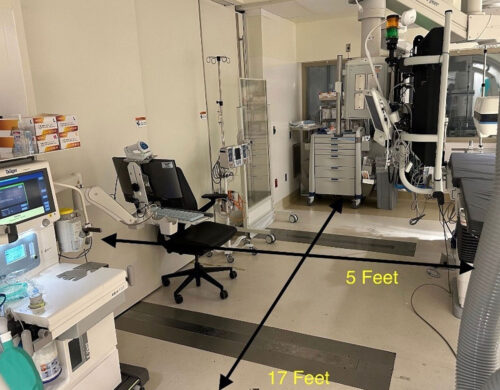
Previous cases of alcohol-based fire have all described an oxidizer in close proximity to the fuel and heat sources.10,11 The usual oxidizer described was supplemental oxygen administered via mask or nasal cannulae. Our patient was unusual in that although his trachea was intubated the surgical site was as far away as it could be from the airway. Thus the oxidizer was room air (21% oxygen).
This fire was not detected during the case, as the burning vapors did not result in visible ignition. The surgeon felt a transient flash of heat as the sole indicator of the vapor fire beneath the drapes. He interpreted the sensation as indicative of a pinhole in his glove allowing a slight cautery hand burn.
Manufacturer's instructions for the correct application of alcohol-based prep solutions have long warned about the flammability of the alcohol in solution and the need for adequate drying time. In October 1997, suppliers revised labeling to instruct users to prevent the solution from pooling, blot any excess solution, remove soaked drapes, and so forth.13 Suppliers require sales representatives to provide annual operating room in-service training to customers.
The ECRI has made the following recommendations for the use of alcohol-based prep solutions in the operating room:14
We concur with the ECRI recommendations above. Anesthesiologists, nurse anesthetists, and anesthesiologist assistants are already informed and vigilant about heat sources and anesthetic gas oxidizers, including oxygen, particularly around the airway. In this unusual case, the oxidizer was room air, the fuel was alcohol vapor from the prep solution, and the fire was far from the airway. We wish to heighten awareness of the potential risk to patients from alcohol prep solutions and to stress the importance of strict adherence to the ECRI recommendations for the safe application of alcohol-based skin preparations.