
To the Editor:
Figure 1. Dantrolene sodium solubility
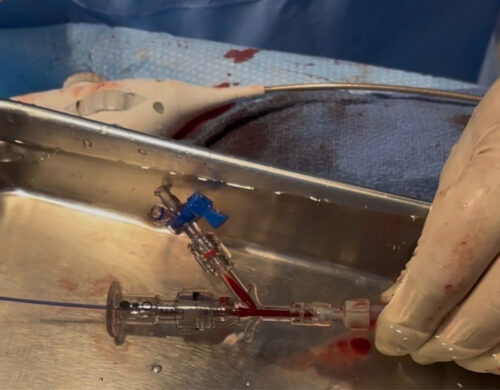
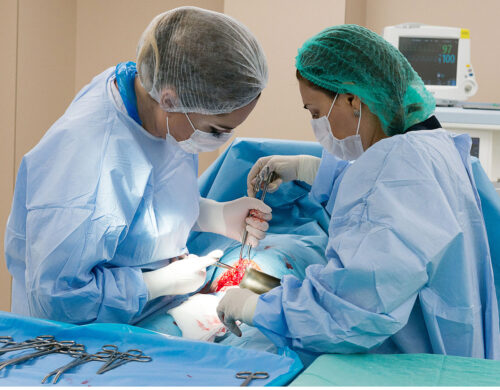
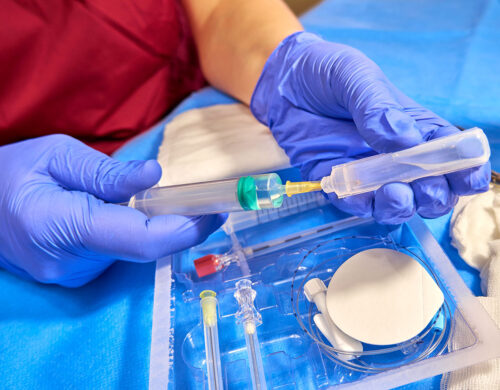
The idea of adjusting temperature to impact the solubility of a substance is hardly revolutionary. The mythical tale of Icarus serves as a testament to the ancient Greek's understanding of the sophisticated nature of physics by illustrating the relationship between temperature and the corresponding state of matter. Through a study we conducted in an operating room environment, we were able to demonstrate a significant reduction in the time from the start of mixing to the ability to administer intravenous (IV) dantrolene sodium. In a simulation of real world conditions, with equipment common to the operating room environment, a randomized, controlled, single-blind study was conducted dividing 16 dantrolene sodium vials into 2 equal groups, a warm group (41°C) and an ambient temperature group (22°C). By the use of an IV fluid warmer at 41°C, primed using a 1-liter bag of preservative-free sterile water, attached to a 60-ml syringe via a 3-way stopcock, the diluent was aspirated and injected directly into each dantrolene sodium vial.
Chartrand1 was the first to suggest the use of an IV fluid warming device to facilitate dantrolene sodium reconstitution. A comparison of our investigation with the work of Mitchell and Leighton,2 and that of Quraishi et al.,3 validates the notion that warmed diluent hastens dantrolene sodium solubility, although the methodologies developed to reach this conclusion contrast on several levels. Mitchell and Leighton examined this concept; however, their study included only 1 data point at 5 different temperatures between 20°C and 40°C. Although they determined the presence of a linear relationship between diluent temperature and solubility, their study lacked the power to adequately support the significance of their findings. After the data were collected for the present study in May 2006, Quraishi et al. published their report with similar findings. Quraishi et al. mimicked Mitchell and Leighton's results and claimed their data were collected under clinical conditions. Interestingly, they emptied all of their sterile water vials into a sample cup prior to mixing the dantrolene sodium. This task devours precious time, challenges aseptic technique, and fails to replicate actions that might take place during a malignant hyperthermia (MH) crisis. They also incorporated warming closets to heat their sterile water. Many of these devices are not intended to warm IV fluids, and we cannot recommend them for use in this application. In addition, neither of the study designs in the aforementioned investigations incorporated blinding of the observing party.
Our use of an adequate sample size and a methodology for warming the diluent with materials common to the operating suite and readily available to the anesthesia provider (warmed diluent [41° C] versus ambient temperature [22° C]), hastened the time of aqueous solubility of dantrolene sodium (Figure 1). The mean time to particulate-free dantrolene sodium solution suitable for IV injection with the warm diluent was 58.88 seconds compared to 93.87 seconds for the ambient temperature group (p<0.001). Data suggest a time savings of about 35 seconds per vial when the diluent is warmed to 41°C.
The time needed to mix an appropriate number of dantrolene sodium vials to successfully treat MH necessitates the assistance of multiple providers during a crisis. The time-savings afforded by mixing dantrolene sodium with warmed diluent versus ambient temperature sterile water for 1 and 3 mixers is summarized in Table 1. The results demonstrate the Icarus effect, the crucially important relationship between the effect of temperature and the corresponding state of matter. Warming the aqueous diluent hastened the development of a clear and particulate-free dantrolene sodium mixture suitable for IV injection, freeing precious manpower time for other life-saving measures.
The manuscript from this study was recently published in the April issue of the AANA Journal.4 This letter is written to disseminate this information in the event someone experiences a MH crisis, and to promote patient safety that may improve patient outcome. A practical method, using a reliable and safe warming device readily available to the anesthesia provider, and ubiquitous to the operating room environment, speeds the time to administration of dantrolene sodium, potentially reducing morbidity and mortality associated with MH. Perhaps our research, in addition to the work of Mitchell and Leighton and Quraishi et al., will lay the groundwork for changing MH treatment protocols, and help further reduce morbidity and mortality.
Donna Landriscina, CRNA, MSNA
Richmond, VA