
Myocardial stents (both bare metal and drug-eluting varieties) are widely utilized to prevent restenosis following percutaneous transluminal coronary angioplasty (PTCA) and coronary intervention (PCI). Indeed, by 1999 myocardial stents were inserted in 4 of every 5 patients undergoing PCI.1 It now appears what is good for the heart may be good for the brain, too!
Atherosclerotic intracranial arterial stenosis is an important cause of stroke. The WASID (Warfarin Aspirin Symptomatic Intracranial Disease) trial, a double-blind, multicenter clinical trial, evaluated the benefits of best medical therapy (warfarin versus aspirin) in patients with symptomatic intracranial stenoses (50-99%). The primary end point was ischemic stroke, brain hemorrhage, or death from vascular causes other than stroke. During a mean follow-up period of 1.8 years (n=569), the primary end point occurred in 22.1% of the patients in the aspirin group and 21.8% of those in the warfarin group (hazard ratio, 1.04; 95% confidence interval, 0.73- 1.48; P=0.83).2
Because medical treatment of symptomatic intracranial stenosis carries a high risk of stroke, neuro-interventionalists (interventional neurologists, endovascular neurosurgeons, and interventional neuroradiologists) are finding increasing application for stents in cerebral vessels with symptomatic severe stenoses that are refractory to best medical therapy. The main goal of the angioplasty and stent placement is to improve blood flow. Some of these lesions may manifest symptoms only after they become extremely tight, and even relatively minor corrections in the degree of stenosis may improve symptoms and outcomes. Flow is proportional to the fourth power of the vessel's radius. This means that the flow is approximately doubled when the radius is increased by 20% or the diameter by 10%, so that small increases in the luminal diameter may result in large increases in the flow.
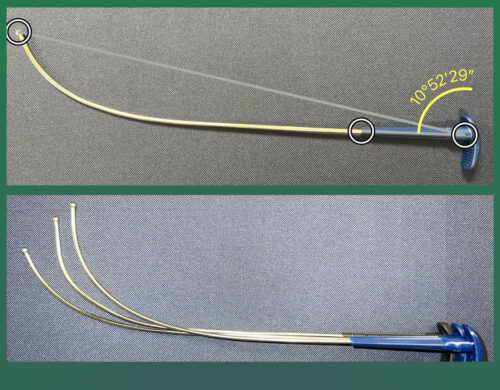
Figure 1: The Wingspan™ stent.
The Wingspan™ stent (Figure 1) is placed via Gateway™ PTA balloon catheter system (Boston Scientific Corporation, Fremont, CA), which is approved to increase cerebral artery lumen diameter in patients with intracranial atherosclerotic disease (>50% stenosis that is refractory to medical therapy).
The Wingspan™ bare metal stent is manufactured in diameters from 2.5-4.5 mm, and in lengths from 9-20 mm. The device is inserted by neuro-interventionalists via intra-arterial catheters across stenotic lesions using biplane fluoroscopy for sentinel vessel identification and localization (Figure 2). The patients may require deep MAC sedation or general anesthesia during the procedure depending on individual circumstances and interventional protocols.
Clinical experience with the new cerebral stents is relatively limited. A prospective, multi-center, single arm trial of 45 patients at 12 interventional centers evaluated the safety and feasibility of the current stent system. These patients had a mean age of 66 +/- 8 years, with 96% having a neurological history of stroke and 29% a history of TIA. The 3 most common sites for stent placement were the vertebral artery (29%), the middle cerebral artery (22%), and the carotid petrous artery (11%). All patients successfully underwent balloon angioplasty to dilate the lesion, and a stent was then deployed across the dilated lesion in 44/45 patients (98% success). Potential adverse events include intimal dissection, stent migration, misplacement, or thrombosis, vessel perforation, or rupture. Subsequent, single center series have validated these results.3 Actual results of this pilot study are shown below:
| Major Endpoints (30 days) | Total Evaluable Patients = 44 | |
| Number | % | |
| Death or ipsilateral stroke (same hemisphere as lesion) | 2 | 4.5 |
| Death | 1 | 2.3 |
Of special note, metal stent implantation causes endothelial injury with inflammation, rendering both the stent and affected vessel highly thrombogenic for a prolonged period.4,5 Thus, anti-platelet therapy with aspirin and clopidogrel is required for 4-12 weeks after cerebral stent placement. Adjunctive antiplatelet medication is crucial in preventing local stent thrombosis, major stroke, and death.5,6 Current recommendations for patients with bare metal stents include dual antiplatelet therapy with aspirin and clopidogrel, continued for at least 4 and up to 12 weeks to allow complete endothelialization of bare metal stents (BMS). Thus, anesthesia providers must be aware of patients presenting with cerebral stents and the status of antiplatelet therapy during this vulnerable period. Indeed, these complex issues parallel myocardial stents recently reviewed by Newsome et al.7
Figure 2: These two figures demonstrate successful dilation of a >90% stenosis in the left middle cerebral artery of a 53-year-old woman who had been having multiple left hemispheric TIAs (mini-strokes) while on maximal medical therapy. After balloon angioplasty, a Wingspan™ stent (radiographic markers denote the proximal and distal boundaries) was inserted to optimize the vessel lumen. Figures 2A and 2B show the >90% stenosis in the proximal M1 segment of the left middle cerebral artery (white arrows). Figure 2A is in the anterior-posterior projection (front view), and Figure 2B is in the lateral projection (side view). Figures 2C and 2D show the balloon catheter and microwire across the stenotic lesion and how the vessels have improved in size post-angioplasty. Figures 2E and 2F show the final result post-balloon angioplasty and Wingspan stent placement with no residual stenosis in the left middle cerebral artery.
In summary, anesthesia providers should be aware of increasing insertion of metal stents throughout the circulation, including the cerebral circulation. Current trends suggest we will see increasing frequency of neuro-interventional procedures including intracranial angioplasty/stenting. The need for post-procedure antiplatelet therapy is significant, and will likely mirror that noted for myocardial bare metal stents.5,6