
Surgeon Should Give Feedback to His Health Care Team Firstback to top
To the Editor: I am amazed by the response to the anonymous surgeon/patient's perioperative experience recounted in the 2004-5 winter issue of the APSF Newsletter. I have been in practice for 20 years, in both academic and private practice settings. Currently, I practice in a tertiary care referral center with an anesthesia residency. The overwhelming majority of “anesthesia providers” are dedicated to excellent patient care and very professional in their approach to the patient. I am sorry that this surgeon/patient did not have quite the perioperative experience he was expecting. However, he needs to direct his criticism in a constructive way toward the anesthesia team responsible for his care, and not toward the entire specialty. Interestingly, if I wrote to a surgical newsletter to complain about my surgeon, the letter would probably not be published. I would be told, “Gee, honey, go discuss this with your surgeon.” As a specialty we seem to have a collective inferiority complex! But, why? Advances in surgery would not be possible without advances in the field of anesthesiology. Anesthesiologists have pioneered fields like intensive care medicine and pain medicine. The ABA is committed to the continuing education of its members. The residents that I train are as intelligent, dedicated, and hard working as any surgery resident, if not more so. Coming to work is a pleasure, and I consider myself blessed to work with such competent individuals. I have a great suggestion. Let's invite Dr. Phil McGraw to the next ASA meeting. Maybe he can figure out the basis for this collective inferiority complex, because I can't! I can, however, recommend one helpful exercise for those who might still suffer from such a complex. Before you leave for work in the morning, look at yourself in the mirror and tell yourself, “Damn I'm good!” |
|
To the Editor: Hypoxemia in the Hospital Frequently an Early Sign of Impending Catastropheback to top Dr. Stemp makes an interesting point, albeit with great drama: detection of transient hypoxemia is not nearly as vital to patient outcome as determination of cause. Summarizing the logic of his letter, one would conclude that treating hypoxemia with oxygen but neglecting further investigation enables the undetected respiratory pathology to continue. His points are legitimate. Most humans outside the hospital tolerate transient hypoxemia without sequelae as it is usually produced by a benign or self-limited process. However, hypoxemia in the hospital frequently is an early sign of impending catastrophe. Perhaps Dr. Stemp would agree with this conclusion: oxygen should be the first step in addressing hypoxemia, but never the last.
|
To the Editor: Do Not Break Contact With the Patientback to top I read with interest, and sadness of course, of the 3 examples of anesthetic accidents in the article "Turn Your Alarms On" in the winter issue of the APSF Newsletter. I have been retired for almost 15 years, but was forcibly reminded by the article of my constant admonition to residents and students: “Do not break contact with the patient.” A precordial stethoscope for all conscious patients and an esophageal one for all under general anesthesia was a constant routine for all my patients. My spiel was,
There is no excuse, of which I am aware, for the anesthesiologist to leave the head of the patient; he or she has no obligation to help anybody do anything; his only obligation is to the patient's safety. This sounds mundane, but I pounded it into my residents. Monitors are fine, but these 3 accidents would not have happened if my rules had been followed. |
To the Editor: PACU Pulse Ox Tone Touted back to top I'm in total agreement regarding the special need to hear the pulse beep tone for pulse oximetry during anesthesia. Anesthesiologists can testify to the importance of the pitch/saturation ratio (and to the fact that the "dive-bombing falling pitch" will never go unnoticed). However, I'm always amazed that when I take a patient to the PACU, the nurses have turned off all "noise-makers" (is it to have a quiet place for the recovering patients?). I have often asked them to turn the pulse oximetry beep tone on with my patients. I explain to them they can turn their backs on the patient and still hear the most important beep in the world. I would like to suggest that the APSF institute a policy for the PACU which is identical to the OR. Sincerely, |
To the Editor: Reader Softens View of OR Readingback to top I am replying to your article in the APSF Newsletter and offering you my perspective on the issue. I am in total agreement that the image we project is important, and the image of Dr. Giesecke with his feet propped up on the anesthesia machine presents a poor image. On the other hand, the level of sensory deprivation can be extremely variable in cases, and the ability to multitask varies among anesthesiologists. In the past, manpower was sufficient, and case volume was large enough that those in need of constant stimulation could just stick with open hearts, AAAs, and so forth. Today, we might do complex cases one day and the next be stuck in a dark room with an ASA 1 or 2 patient for 2-4 hours in a case with almost no potential for blood loss with only a minimal break from a sympathetic colleague. Reading material downloaded onto a PDA from a site such as Avantgo® is much more discreet and can be done such that monitors can be still in the field of view, keeping someone used to multitasking in complex cases from being lulled into boredom. Useful PDA software such as ePOCRATeS® and other clinical applications make it a common device for clinicians to keep with them. When I started practice, I only supervised residents and CRNAs in an academic setting and was a staunch opponent of any reading in the OR. In my current practice, I supervise some, but often do cases of varying complexity alone. This experience has caused me to soften my position on this issue.
|
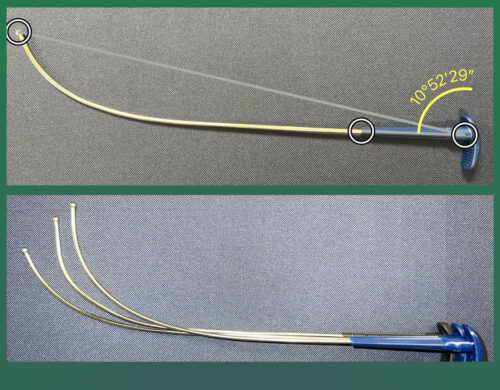
To the Editor: High Airway Pressure Mandates Diagnosis and Remedy back to top In the Fall 2004 issue of the APSF Newsletter, Dr. Nichols et al. stressed the importance of machine check, especially of the reusable pieces of equipment to avoid a foreign body in the circuit causing high airway pressures (HAP) after intubation. This problem is not uncommon and continues to cause anxiety when encountered. I am sure many of us follow a pattern of checks when confronting the problem of HAP after intubation. The order of these checks is decided by the preexisting problems of the patient, the machine, and also by previous encounters of a similar nature. The checks have to be quick (time and life-saving), systematic, and cost-effective. The following sequence, although not exhaustive, may suit most of the circumstances (Figure 1) and is for the benefit of anesthesiologists who have not encountered HAP after intubation, and, it is hoped, will never have to use this algorithm. On initial notice, it may be a good practice to put one’s hand under the drapes and feel for the ETT outside the patient, which may be obstructed by the surgeon’s hand or kinked due to the plastic’s inherent properties. Following that, perform auscultation of the chest to detect breath sounds. Precordial stethoscopes placed prior to draping come in handy. Rhonchi, or bilateral absent breath sounds, are treated by a dose of albuterol. If the HAP continues, start Ambu bag ventilation. If ventilation is easy, the obstruction is proximal to the ETT. This is approached systematically from either the angle piece and upstream or the ventilator and downstream, not forgetting that some of the causes missed are a stuck O2 flush valve, wrong vacuum settings in the scavenging system, and leak from ventilator bellows. The causes of HAP distal to the angle piece are either from the patient or the ETT. With continuing anesthetic, by the intravenous route if necessary, pass a suction catheter down the ETT (Figure 2). This will give some information, depending on how far one is able to pass the catheter. Once the ETT is eliminated as a cause for HAP, the patient causes are approached while having in mind the preexisting problems of the patient and the sequence of events that led to the HAP. This systematic approach avoids changing the ETT unnecessarily with its attendant problems of laryngeal trauma, saves the time of reintubation, and is also cost-effective. |
![]() |