
APSF Stresses Use of Audible Monitor Alarms
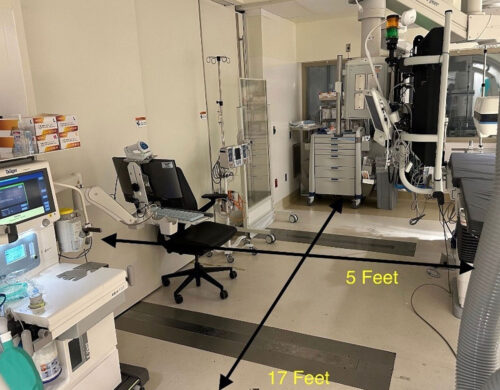
Monitoring the patient’s physiologic function during anesthesia is intended to facilitate, but not replace, the constant vigilance of the anesthesiologist. In this regard, monitors may be viewed as adding an “additional safety net” for the vigilant anesthesiologist. Since the adoption of the ASA’s “Standards for Basic Anesthesia Monitoring” by the House of Delegates on October 21, 1986, there has been an evolution of monitoring technology and consensus among anesthesiologists, which is reflected by the amendment of these monitoring standards on October 21, 1998, to include pulse oximetry and capnography.1 The existing Standards for Basic Anesthetic Monitoring include “an oxygen analyzer with a low oxygen concentration limit alarm” and “use of a device that is capable of detecting disconnection of components of the breathing system. The device must give an audible signal when its alarm threshold is exceeded.” Since these standards were last amended, the development and availability of audible information signals as part of the physiologic monitors has continued to evolve. Further, one of the national patient safety goals of the Joint Commission on Accreditation of Healthcare Organizations (JCAHO) is to “improve the effectiveness of clinical alarm systems.”2 This JCAHO safety goal includes the statement: “Assure that alarms are activated with appropriate settings and are sufficiently audible with respect to distances and competing noise within the unit.”2 The JCAHO’s suggestions for meeting this goal and its recommendations are to “develop and implement policies that prevent turn-off capabilities for alarms.”2 In a report of 1000 anesthetic incidents, the fact that an “alarm sounded” was recognized as one of the most important factors in minimizing the severity of the incident.3 Despite the compelling logic for utilizing audible information signals to enhance the anesthesiologist’s vigilance, the reality is that audible physiologic alarms may be viewed as distractive and disruptive by physicians, leading to the routine practice of “silencing” the alarms.4 Audible alarms may not provide valid physiologic information and may be associated with patient interventions and events already known by the anesthesiologist. Furthermore, how many audible alarms (and their variety of tones) are really needed? These questions have led the Anesthesia Patient Safety Foundation (APSF) to announce the following initiative:
Ultimately, any change in monitoring standards that speaks to the use of audible alarm signals will be based on consensus and cooperation between anesthesiologists and those manufacturers who incorporate audible information signals in physiologic monitors. It is my personal bias that the audible presence of the “beep” tone from the pulse oximeter, plus knowing that the audible alarm on at least one physiologic monitor of the anesthesiologists’ choice (oxygen saturation, end-tidal carbon dioxide, heart rate, blood pressure) is active, would provide the desired safety net to the anesthesiologists’ eternal vigilance without the distraction that may be created by a “chorus” of alarms sounding without valid physiologic reasons. The APSF intends to provide the forum for these discussions and urges input from anesthesiologists and manufacturers on this important anesthesia patient safety question.
|
References
|