
Patient
Safety and Production Pressure: Intensive Care Unit
by
Richard C. Prielipp, MD, FCCM
"We have embraced cost containment as a core value" (Hospital CEO, 1994). Because intensive care is expensive care, the ICU is a frequent target for aggressive cost-cutting programs. Hospitals, embracing this philosophy, decreased full-time equivalents (FTEs) 20% per 100 patient discharges during the years 1993 to 1997 (Health Care Advisory Board, The Advisory Board Company, Washington, D.C., 1999). Is it possible that the focus on "cost containment as a core value" has worsened patient outcomes, and accelerated ICU staff burnout? A review of over 3,700 American hospitals found that mortality rates decreased as staffing (per occupied bed) for medical residents, registered nurses, and registered pharmacists increased. Conversely, mortality rates worsened as staffing levels increased for hospital administrators or (less expensive) licensed practical-vocational nurses.1 Currently, staff morale in many ICUs is at an all time low. Clearly, we need to forge a better balance of safety and efficiency within the complex environment of the ICU.
The Economic ICU Issue
Intensive care developed in response to increasing demands of medicine and surgery, from simple support of minute ventilation with the "iron lung" for Denmark’s polio victims, to today’s explosion of technology and pharmacology to support virtually any failing organ. However, the rapidity of growth, and resultant complexity of training, has resulted in significant variation in critical care organization, delivery, staff quality, resource utilization, and overall effectiveness. More recently, pressure to reduce the resultant high cost of complex technology and associated skilled health professionals has placed the ICU under intense financial scrutiny. For example, changes to Medicare payments mandated by the Balanced Budget Act (BBA) of 1997, combined with the parallel maturation of managed care within the private sector, have accelerated the reduction in both total and operating margins of teaching hospitals.2 Such economic factors only compound difficulties inherent in the recruitment and retention of trained, skilled, and motivated critical care professionals.
How Often Do Errors Occur in the ICU?
Anesthesia providers recognize that nearly one-half of adverse events in hospitalized patients are associated with the perioperative period. Indeed, up to 11% of patient admissions to the ICU are precipitated by iatrogenic events in hospitalized patients with, among these, a mortality rate of 13%.3 One study found an estimated 1.7 errors per patient per day (out of an average of 178 directed activities per patient per day) in the ICU.4 Physicians had the highest rate of errors, though physicians and nurses were equal contributors to the total number of errors. Even more alarming, 29% of these errors (if uncorrected) had the potential to cause significant morbidity or even death.4 In another prospective study, 31% of ICU patients suffered an iatrogenic complication—13% were major complications with three (out of 400 admissions) resulting in death.5,6 While equipment and monitor malfunctions can and do occur, human error is by far the biggest risk and accounts for two-thirds of ICU complications.4 To date, safety has been the focus of only the most preliminary of analyses of the ICU work environment and ergonomics. We must recognize that such complications are common, and independently contribute to hospital mortality. Specific examples, along with proposed safety strategies, are noted below.
Example 1: Adverse Drug Events
A host of drugs may precipitate adverse drug events (ADE) in the ICU.7
Hospital rates of ADE are 6.5 per 100 admissions. One percent of such ADE are
fatal; another 42% represent serious or life-threatening complications.7
Overall, 28% of ADE are judged to be preventable, but even a greater percent
(42%) of serious or life-threatening ADE may be preventable.7 With
ICU patients receiving up to 50% more drugs than their general medical or
surgical cohorts, they have a greater likelihood of experiencing an ADE.8
Preventable adverse drug events and potential adverse drug events occur at a
rate of 19 per 1000 patient ICU days, a rate twice that of non-ICU care wards.8
At least 75% of preventable drug errors occur in the physician ordering (39%) or nurse administration (38%) stages of drug therapy. The majority of physician errors involve choosing either the wrong drug or prescribing the wrong dose of drug.9 The proximal causes of these physician errors are deficiencies of knowledge about the drugs’ indications, correct dosing, and frequency of administration, as well as failure to recognize (or recall) known patient drug allergies.
Strategy: Practice Parameters and the
Institutionalization of Safety
Human error accounts for over 80% of the accident risk involving complex systems (such as the ICU), whose errors are traced to organizational factors, training, supervision, and personnel schedules.10 Thus, effective risk reduction must involve management issues as well as technical improvements. Plans to reduce ADE are most fruitful if they specifically target the vulnerable periods of drug ordering and administration. Improved information systems which instantly display drug and patient data produce long-lasting reduction in drug errors, whereas simple surveillance programs with correction of individual errors have little long-lasting benefit.9 Administrators and medical directors of the ICU must recognize ADE as systems failures.
Additional risk reduction may accrue through use of consensus, evidence-based guidelines. For instance, the American College of Critical Care Medicine (ACCM) of the Society of Critical Care Medicine (SCCM), in collaboration with the American Society of Health-Systems Pharmacists (ASHP) has recently adopted this approach and developed "clinical practice guidelines" for the use of sedative, analgesic, and neuromuscular blocking drugs in the ICU.7,8 Such guidelines are periodically reevaluated to keep pace with changes in drug formularies, current ICU clinical practice, and new outcomes research. These parameters recognize both the overt savings involving direct drug costs, as well as the covert cost effectiveness related to reducing ADE.7
Example 2: Central Venous Catheters
Anesthesiologists frequently access the central circulation for
administration of intravenous fluids or vasoactive drugs, monitoring of
intravascular pressures, determination of mixed venous oxygen saturation, and
estimating cardiac output. However, up to 14% of central venous catheters may
become colonized in ICU patients resulting in 60,000 cases of bacteremia each
year. Because treatment of catheter-related infections is so costly (one
infection increases hospital charges by $11,000), prevention is the best
strategy.11
Strategy: Technology and Clinical Practice
Merge
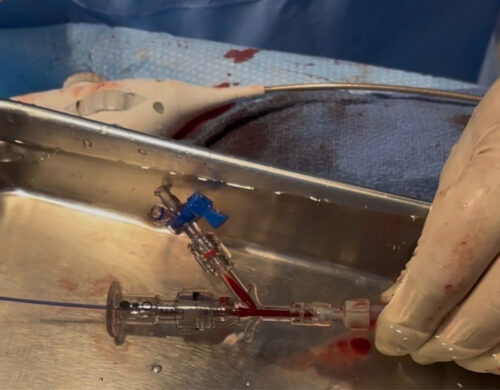
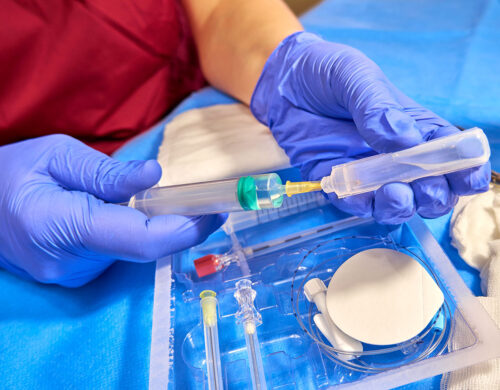
Both high- and low-technology solutions are necessary to address the problem of catheter-induced sepsis. The simple, effective practice of skin site preparation is optimized by use of chlorhexidine, a non-toxic solution which decreases catheter-site infections. More sophisticated technology has modified the catheter itself by bonding various antimicrobial agents such as cefazolin, or minocycline/rifampin.11 However, the most important technique preventing catheter-related infections involves appropriate use of aseptic technique during catheter insertion. Vital components include a widely prepped and draped sterile field.
Strategy: Patient Simulation and Modeling
Improves Clinical Practice
Anesthesiologists have been pioneers in the development and application of medical models and laboratories for research and training, including the development of interactive, mannequin-based, patient simulators.12 Simulation has many advantages for research, training, and performance assessment, becoming widespread (but not yet universal) in anesthesiology and critical care. Fully embracing the benefits of simulation may be a key strategy to improve diagnostic acumen, technical expertise, decision-making, process, and teamwork skills. Communication breakdown between physician and nurse is recognized as a contributor to serious errors in the ICU, and cohesive team management can be modeled and taught in the simulator. We have utilized a formal simulation- instructional technique to facilitate new house staff learning proper aseptic technique and procedures for insertion of central venous catheters.13 This one-day multi-faceted effort has decreased nosocomial infection rate associated with central venous catheters 28%, from 4.5 infections per 1,000 patient days, to 2.9 infections per 1,000 patient days.13 Our experience suggests rapid gains in safety can be achieved when intensivists recognize and apply the principles of patient simulation to the complex environment of the ICU.13
Summary
Individuals and families should be confident they will receive the best
possible critical care available. ICU physicians and nurses should be able to
work with enthusiasm, knowing that they are capable and equipped to provide
quality care for their patients. Thus, anesthesia professionals must
understand, promote, and lead efforts to improve patient safety throughout the
hospital, including the ICU. However, thus far, few have answered this call.
Only 2% of ASA members are certified in critical care. Fewer still practice
regularly in the ICU setting. Leaders in professional societies and academic
medicine should step forward to focus on patient safety, including the ICU. Our
unique experience, knowledge, and team leadership provide a mechanism to
identify issues of ICU patient safety, and mobilize appropriate forces to
remedial action. We must resolve to correct the erosion of hospital core values
discrepant with optimal patient care, so that the public need never again reach
conclusions such as: "Hospital care is not very good... You’re likely to
get sicker or more injured by mistakes made by poorly trained or overworked
staff."14
References