
Letters to the Editor:


Mandatory Safety Reporting Feasibility Questioned

To the Editor:

The suggestions in the letter (Summer 2000 APSF Newsletter) from Dr. Mychaskiw regarding mandatory safety reporting for anesthesia in a manner similar to that in the airline industry head in the right direction, to my opinion, but the devil is in the details. Everyone makes the aviation comparison but not always with detailed examination of how aviation does it. Just for example, airline pilots are paid more for flying at night, in the newest UAL contract up to $15 per hour - shouldn't that apply to us as well?

However, the thrust of my response is to point out that aviation does have a reporting mechanism, started in 1975, but not through the NTSB, which has its hands very full investigating accidents. The reporting (ASRS-http://asrs.arc.nasa.gov/) system is directed by NASA, through a contractor(Battelle Memorial Institute) out of Moffit Field in northern California. Reporting forms are available at any local FAA office, and require that submission include information about what should have been done to eliminate or decrease the hazard. Thousands of these reports are filed and a monthly newsletter, CALLBACK (>85,000 copies) is issued every month. Frequent studies(>56) are issued by the ASRS. It has as its sole directive promoting aviation safety, through developing understanding of the interface between the system and the people in it, and has been invaluable in that regard. Why do people report events? Simple - the FAA provides amnesty for any aviation error, such as an altitude "bust," which is not related to a crime or willful violation of the regulations, reported in a timely manner. For anesthesia, the APSF is the ideal organization to set up such a systemÑbut how do we motivate the submission of reports? Trial lawyers would contribute an amount equal to the California state budget to erase the word amnesty from the language. The aviation system works because it is cooperative and all have the same goals - everyone goes home alive. That is not the case, unfortunately, in the adversarial legal system in which we all function, where the first step after a mishap is to fix blame. Mandatory reports can be legislated, but without some form of identity cloaking or protection, they will be written in such nonspecific language as to be useless for serious purpose. Ask those at the NTSB or other aviation safety organizations, such as the U.S. Navy Safety Center in Norfolk, VA, how effective they think investigation would be without some kind of witness protection. Finally, if all else fails, consult the Fifth Amendment of the U.S. Constitution on the right to avoid self incrimination. Before the reports start arriving, the safety concept needs more than lip service from a system otherwise directed primarily toward terrorizing the employees.

C.F. Ward,
MD San Diego, CA


Epidural Catheter Wire Left Behind in Patient's Back

To the Editor:


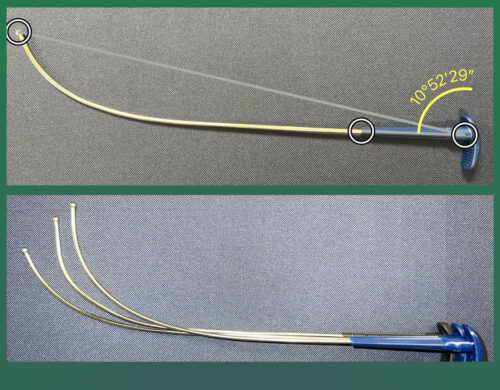
In response to the letter "Broken Epidural Catheter Provokes Investigation, Algorithm Application" (APSF Newsletter, Fall 2000), I would like to report a similar instance of catheter separation using the Abbott Wire Tip Epidural Catheter. Our patient, a healthy gentleman, underwent a total knee arthroplasty solely under epidural anesthesia. The catheter was placed at the L2-3 interspace with the patient in a sitting position without difficulty and provided excellent anesthesia for the duration of the procedure. The catheter was left in place for 3 post-operative days with excellent pain relief.

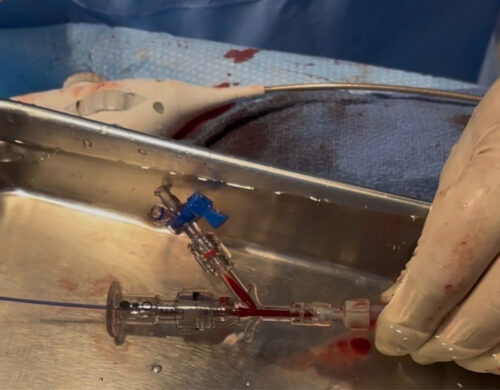
Upon removal of the catheter by the surgical floor nurse assigned to the patient, resistance was encountered. At this point a second nurse attempted to extract the catheter with further application of force. Positioning of the patient at this time could not later be determined. The catheter was successfully removed but the wire tip of the catheter was found to be stretched with evidence of separation of the tip of the wire. This was confirmed by X-rays (PA and lateral) which showed approximately 1 Ð 1 1/2inch of wire remaining within the epidural space extending into the interspinous ligament. Consultation with pain management colleagues suggested that the position of the catheter showed it to be caught in the facet joint at L2-3. It was felt that patient positioning during the catheter extraction caused the wire tip to be "pinched" by the joint, which caused shearing of the distal wire during the forceful removal of the catheter.

It should be noted that the patient reported no complaints related to the remaining wire fragment. According to our pain consultant, the catheters are implant tested and should pose no long-term problems for the patient.

James Jarrett, MD
North Houston (TX) Anesthesiologists


A Correction on Disclosure

To the Editor:

A letter in the Fall 2000 APSF Newsletter by Dr. William Mazzei purports to report on a new prone positioner felt to be superior to currently available models.

I would like to point out that Dr. Mazzei is the inventor of the product he so prominently endorses. He states he has used it in 56 cases without incident. He alludes to the fact that prone position injuries are very common with currently available prone positioners. I manufacture the Voss Prone Positionerª which has been used in excess of 600,000 cases.

The only reported complication was in a case done by a resident on her first laminectomy. She admitted that after the patient was positioned at the beginning of the case, she was left unsupervised for the balance of the procedure. She also stated that the table position was changed more than once and that she did not check the patient's position at any time during the case. As the table position was changed, the patient' s head shifted placing one eye in contact with the foam positioner.

The Voss Prone Positionerª is designed to allow the physician to easily slip a finger between the patient's skin and the device to confirm proper positioning and to maintain blood flow to the skin. The Prone Positionerª has been used regularly for over 14 years with only the one complication that was determined not to be attributable to the device.

I'm not sure if the Editor was aware of Dr. Mazzei's connection to the company that manufactures his device but it is inappropriate to publish a "Letter to the Editor" that could be interpreted as an independent study. In view of his relationship and his financial ties to the manufacturer, any objective reporting by the author is not possible.

It is exactly this kind of dishonest reporting cloaked as an independent evaluation that tarnishes the reputation of all physicians in the eyes of our patients and colleagues.

I would appreciate some response to these allegations in your next issue if for no other reason than to establish your lack of knowledge of these circumstances and to re-establish your independence as an editor/publisher.

Gene A. Voss, MD
San Antonio, TX

Editor's Note:
After publication of that letter, Dr. Mazzei did contact this publication and volunteer that he does have a financial relationship with the product described in the letter. The Editor acknowledges that this fact should have been discovered and disclosed with the original letter. The recent intense interest in postoperative visual impairment often associated with the prone position (see Page 59) provoked an exception to the usual APSF Newsletter policy of attempting to avoid specific product brand-name references, positive or negative, in most cases.