
Landmark Report Published on Patient Safety

Prominent National Headlines Proclaimed:

"Medical mistakes 8th top killer"
- USA Today

"The Hazards of Hospitalization"
- Wall Street Journal

"No quick fix for medical errors"
-Orlando Sentinel

"Staying on Guard for Medical Errors"
and

"Do No Harm: Breaking Down Medicine's Culture of Silence"
- New York Times

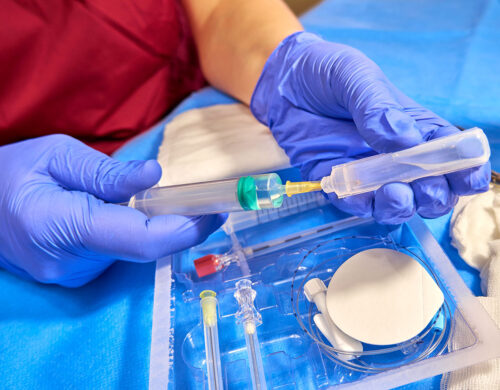
[which opened with a Denver anesthesiologist's account of a medication error in which he administered a muscle relaxant at the end of a case instead of the intended reversal drug because they both came in very similar-appearing vials and of the frequency with which his partners acknowledged the same type of mistake]

"Candor on errors is the cure, but medical profession recoils: News that thousands die from mistakes merits more urgency"
and

"Avoid 'culture of blame:' Key is confidential, non-punitive reporting system"
- Debate on Editorial Page, USA Today

"Clinton: Doctors, government need to battle medical errors"
- Associated Press

"Medical Errors: Clinton Says Government Will Set Example"
- American Healthline

"Report unleashes furious interest in medical errors"
- American Medical News

[Editor's Note: This is a late-breaking report about events that occurred just as this issue was going to press. Expect more on this developing story in future issues.]


By David Gaba, M.D. and Jeffrey Cooper, Ph.D.
for the APSF Executive Committee


In December, the Institute of Medicine (IOM) released a landmark report on medical error and patient safety entitled "To Err is Human: Building a Safer Health System." The IOM is one of the National Academies, which are congressionally chartered private non-governmental agencies providing independent research and advice on scientific and technological matters. This report was issued by the Committee on Quality of Health Care in America.

This blockbuster document, which received widespread media coverage (see above), lays out the magnitude of the problem of medical error (according to some calculations in the report, medical errors may be the fifth leading cause of all deaths), describing it as a systems problem rather than a problem of individual clinicians. The goal of the report is to "break the cycle of inaction" that prevails in dealing with errors. It states that "the status quo is not acceptable and cannot be tolerated any longer." While often mentioning "error," the focus of the recommendations are on analysis of the causes of error and system issues rather than blaming individual healthcare providers.

The experience of anesthesiology and of the APSF was presented to the Committee by Drs. E.C. Pierce, Jr. and David Gaba at one of its workshops on the role of professional societies in improving patient safety. Based on this presentation, the report acknowledges anesthesiology and the APSF as a model of efforts to reduce medical error and improve safety, stating: "Few professional societies or groups have demonstrated a visible commitment to reducing errors in healthcare and improving patient safety. Although it is believed that the commitment exists among their members, there has been little collective action. The exception most often cited is the work that has been done by anesthesiologists to improve safety and outcomes for patients. Anesthesiology has successfully reduced anesthesia mortality rates from two deaths per 10,000 anesthetics administered to one death per 200,000-300,000 anesthetics administered (see chapter 2). This success was accomplished through a combination of:

Simulation Singled Out
The report also makes strong references to simulation training for health care personnel, an area for which APSF has been the major supporter of research and development. The report states: "Another example of ways to prevent and to mitigate harm is simulation training. Simulation is a training and feedback method in which learners practice tasks and processes in lifelike circumstances using models or virtual reality, with feedback from observers, other team members, and video cameras to assist improvement of skills. Simulation for modeling crisis management (e.g., when a patient goes into anaphylactic shock or a piece of equipment fails) is sometimes called "crew resource management," an analogy with airline cockpit crew simulation. Such an approach carries forward the tradition of disaster drills in which organizations have long participated. In such simulation, small groups that work together-whether in the operating room, intensive care unit, or emergency department-learn to respond to a crisis in an efficient, effective, and coordinated manner."

New Federal Center A Key Recommendation
The IOM Committee on Quality in Health Care issued a broad set of recommendations in the report; key among them are:

The detailed recommendations go further in calling for specific actions that, if enacted, should have broad impact on healthcare organizations and providers.

President Participates
The response to the report by the media, the public, President Clinton, and key lawmakers has been surprisingly rapid, strong, and overwhelmingly favorable. Patient safety has now become a "hot issue" at the highest levels, with government task forces and legislative hearings already beginning to get underway. President Clinton immediately authorized increased funding to the Agency for Healthcare Policy and Research (now to be called the Agency for Healthcare Research and Quality). He in large measure endorsed the report and called for implementing most of its recommendations, although some recommendations may not be endorsed, in part due to concerns about the privacy of medical records. The federal "Quality Interagency Coordination Task Force (QuIC)" will be reviewing these recommendations.

APSF Following Up
While no member of the APSF was on the IOM Committee, Drs. Pierce and Cooper were official reviewers of the draft report, although responsibility for its final contents rests solely with the IOM. The officers of the APSF have reviewed and discussed the report and have planned APSF's immediate follow-up activities. It will be the main topic of discussion at the January 28-30 meeting of the APSF Executive Committee. APSF plans to maintain its leadership role in patient safety as the initiatives triggered by the IOM report evolve. While endorsing the report's recommendations in general, and its overall call for major action on patient safety, the APSF officers reserve judgement on the full set of recommendations pending further review.
Readers are urged to read the full text of at least the Executive Summary. That and the full IOM report can be accessed as follows:
1. Read it on the Web at:
http://www.nap.edu/books/0309068371/html/
2. Download it from the Web (as multiple PDF files for Adobe Acrobat) from:
http://books.nap.edu/html/to_err_is_human/
3. Order the book at:
http://www.nap.edu/catalog/9728.html